
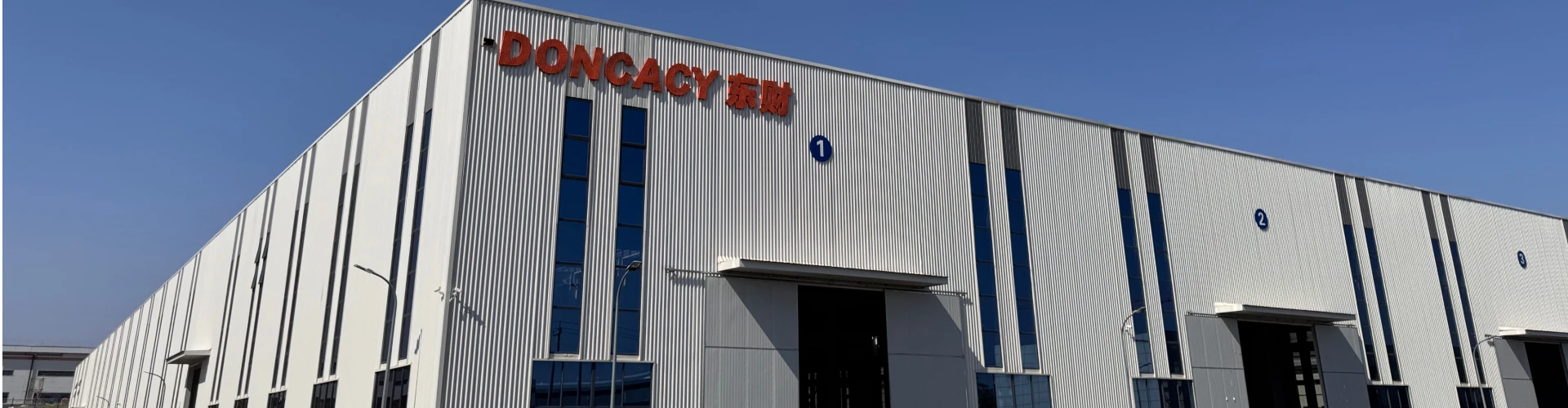
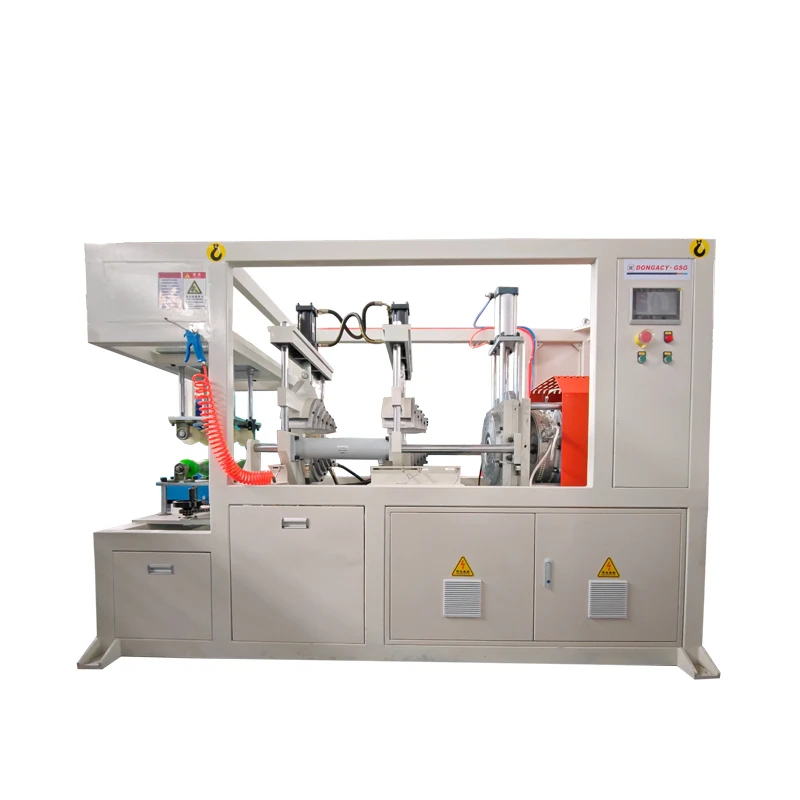
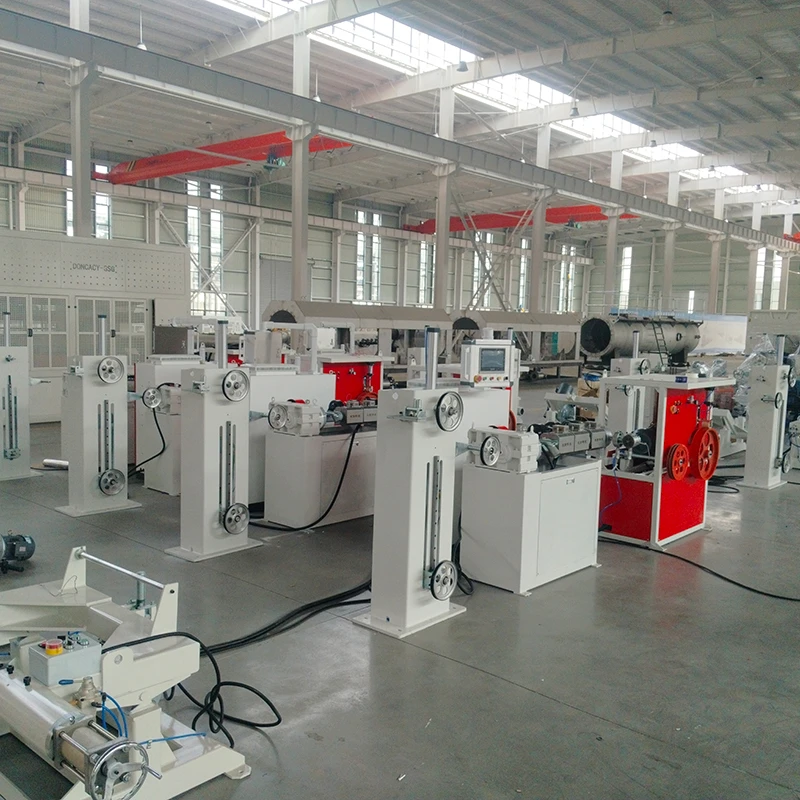
Composite Pipe Production Line stands as a pivotal system in modern composite pipe manufacturing, integrating a series of specialized processes to convert composite raw materials—such as fiber-reinforced plastic, metal-plastic composites, or ceramic-composite blends—into high-performance pipes. These pipes produced by the Composite Pipe Production Line are widely used in drainage, ventilation, lighting, petroleum, sanitation, pipe trenches, underground cable protection, centralized water supply, and centralized heating systems, covering key fields like municipal engineering, industrial engineering, construction engineering, and sanitary pipelines. Unlike single-material pipe production equipment, the Composite Pipe Production Line is designed to handle the unique bonding and forming requirements of composite materials, ensuring the final pipes possess combined advantages of different materials, such as corrosion resistance, high strength, and light weight. Its flexible configuration allows it to adjust parameters for pipes of various diameters and wall thicknesses, meeting diverse project needs from small-diameter sanitary pipes to large-diameter municipal drainage pipes.
Composite Pipe Production Line operates under PLC computer control, featuring high automation and safe operation throughout the entire production cycle
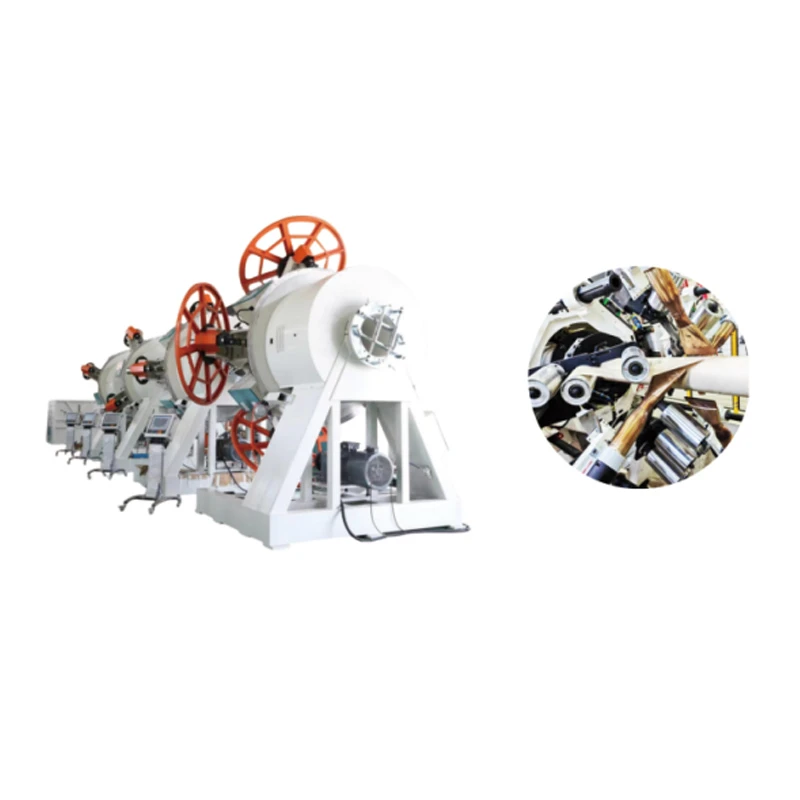
The PLC system coordinates all components—including the material feeding unit, mixing module, extrusion system, molding device, curing unit, cooling system, haul-off mechanism, and cutting machine—to work in synergy. For example, when producing composite pipes for petroleum transportation, the Composite Pipe Production Line uses the PLC to precisely control the ratio of fiber and plastic materials in the mixing module, ensuring the pipe’s pressure resistance meets petroleum industry standards. The automation not only reduces the need for manual intervention but also minimizes operational errors; emergency stop functions and real-time fault monitoring in the PLC system further enhance production safety, preventing accidents caused by equipment malfunctions or human misoperation.
Composite Pipe Production Line incorporates specialized components to address the challenges of composite material processing, which differentiates it from traditional single-material pipe production lines
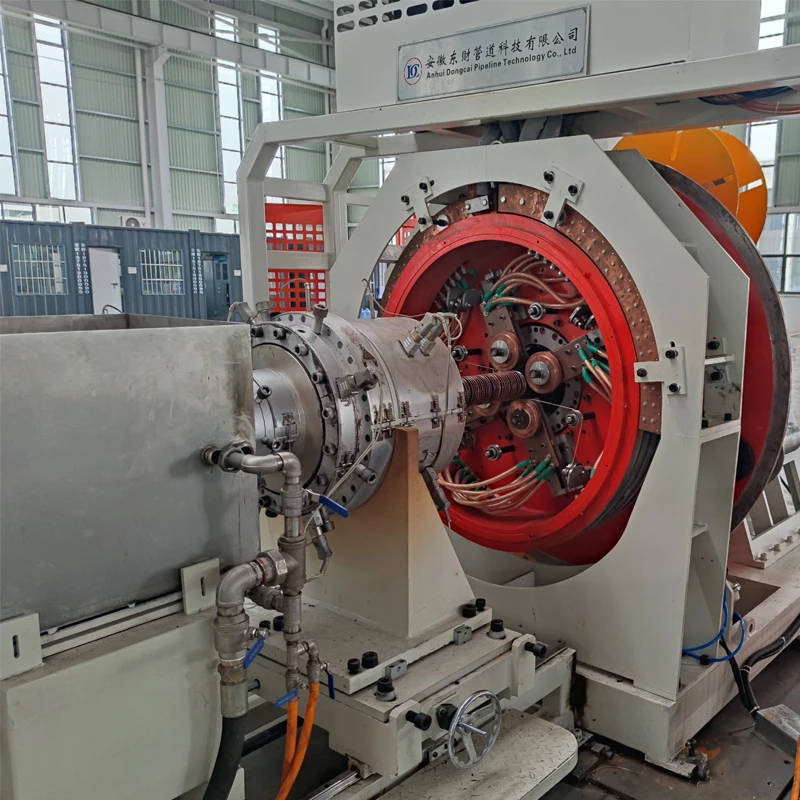
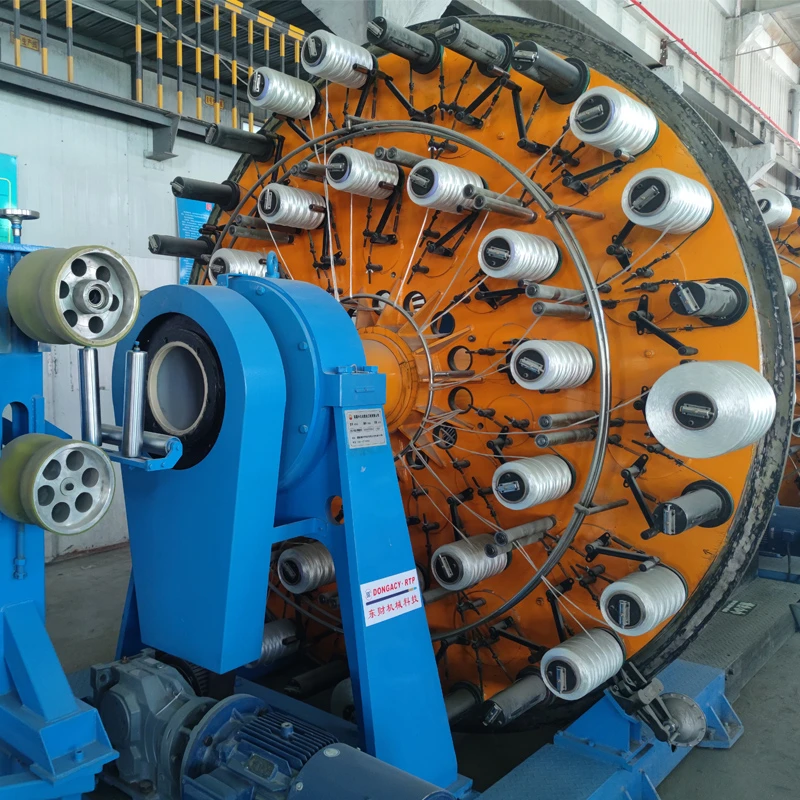
The extrusion system of the Composite Pipe Production Line is equipped with a dual-screw design that efficiently mixes and conveys composite materials, avoiding material segregation and ensuring uniform distribution of reinforcing fibers or metal layers. The molding device uses vacuum calibration technology to maintain the pipe’s precise inner and outer diameters, a critical factor for pipes used in underground cable protection and centralized water supply, where dimensional accuracy directly affects installation and leak-proof performance. Additionally, the curing unit of the Composite Pipe Production Line adopts temperature-controlled heating chambers to optimize the bonding between composite layers, enhancing the pipe’s structural stability and durability, especially for pipes intended for harsh environments like industrial waste drainage or petroleum transportation.
Composite Pipe Production Line enables the manufacturing of pipes with tailored properties to suit specific application scenarios
For municipal engineering projects, the line produces large-diameter composite drainage pipes that combine the rigidity of metal with the corrosion resistance of plastic, capable of withstanding soil pressure and chemical erosion from sewage. In construction engineering, the Composite Pipe Production Line manufactures lightweight composite ventilation and lighting pipes, which are easy to install and have good sound insulation, improving indoor environmental quality. For sanitary pipelines, the line processes food-grade composite materials to produce non-toxic, smooth-walled pipes that prevent bacterial growth, meeting hygiene standards for centralized water supply and heating systems. In industrial engineering, it produces high-pressure composite pipes for petroleum transportation, which can resist high temperatures and pressure without deforming, ensuring safe and efficient oil delivery.
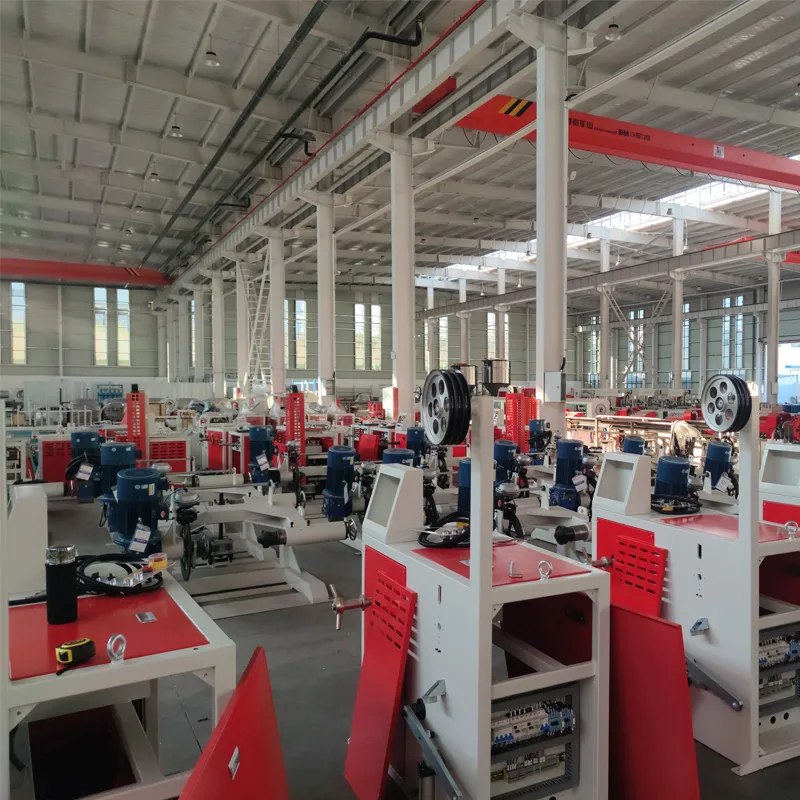
Composite Pipe Production Line continues to evolve with technological advancements to adapt to expanding industry demands
Modern iterations of the Composite Pipe Production Line integrate energy-saving technologies, such as heat recovery systems in the curing unit, to reduce energy consumption during production. Some advanced lines also feature digital monitoring platforms connected to the PLC system, allowing operators to track production data—like pipe output, material usage, and equipment status—remotely, facilitating production management and optimization. Furthermore, the line’s compatibility with new composite materials, such as bio-based composites or recycled composite blends, supports the development of eco-friendly pipes, aligning with global sustainability trends in construction and industrial sectors.
In summary, Composite Pipe Production Line serves as the core equipment for manufacturing high-quality composite pipes that cater to a wide range of applications, from municipal drainage to petroleum transportation. Its PLC-controlled automation ensures high efficiency, operational safety, and consistent product quality, while specialized components address the unique needs of composite material processing. By enabling the production of pipes with customized properties, the Composite Pipe Production Line plays a vital role in supporting the development of municipal, industrial, construction, and sanitary engineering projects. As industries continue to demand more durable, efficient, and eco-friendly piping solutions, the Composite Pipe Production Line will remain a key driver of innovation, adapting to new materials and technologies to meet evolving market requirements.
Composite Pipe Production Line FAQs
1. What are the primary applications of a composite pipe production line?
The composite pipe production line manufactures pipes designed for a vast range of applications including drainage, ventilation, lighting systems, oil transportation, sanitation, trenching, underground cable protection, as well as centralized water supply and centralized heating systems. These products are essential components in municipal engineering projects, industrial engineering applications, construction engineering, and sanitary pipeline networks.
2. How is the automation level of a composite pipe production line characterized?
A modern composite pipe production line is characterized by its high degree of automation, which is achieved through a centralized PLC computer control system. This system seamlessly integrates and manages all stages of the manufacturing process, ensuring consistent product quality, precise operational control, and enhanced overall operational safety with minimal manual intervention.
3. In which major engineering fields are the products from a composite pipe production line utilized?
The pipes produced by a composite pipe production line find widespread use in several critical engineering fields. These include major municipal infrastructure projects, various demanding industrial engineering applications, numerous construction engineering projects, and extensive sanitary pipeline systems, highlighting the versatility and reliability of the production output.
4. What specific functionalities do the products from a composite pipe production line serve?
The functionalities of the products from a composite pipe production line are diverse, serving crucial roles in fluid transport for drainage and oil, providing protective conduits for utilities like lighting and underground cables, and forming the backbone of distribution networks for centralized water and heating in urban areas.
5. What is a key feature that ensures the reliable operation of a composite pipe production line?
A key feature ensuring the reliable and secure operation of a composite pipe production line is its sophisticated PLC computer control system. This system provides comprehensive automated management over the entire production process, guaranteeing stable operation, reducing the potential for human error, and maintaining a high level of safety throughout the manufacturing cycle.
-
High Efficiency PE Extrusion Line Guide for Plastic ManufacturingNewsApr.16,2026
-
High Speed Steel Wire Mesh HDPE Composite Pipe Production Line - Anhui Dongchai|High Automation&Energy EfficiencyNewsApr.13,2026
-
High Speed Steel Wire Mesh HDPE Composite Pipe Production Line - Anhui Dongchai|High Automation&Energy EfficiencyNewsApr.13,2026
-
Guide to Choosing High Efficiency ppr pipe extrusion machineNewsApr.09,2026
-
Comprehensive Guide to Modern Pipe Production Line Technologies and OptimizationNewsApr.07,2026
-
Choosing the Right Extrusion Pipe Machine for Optimal Plastic Pipe ProductionNewsApr.04,2026
-
Comprehensive Guide to PPR Pipe Extrusion Line Technology and ApplicationsNewsMar.31,2026


