
THE BUYER'S GUIDE / SELECTION
Choosing a Composite Pipe Production Line Manufacturer: Application Fit and Specification Checks for Steel Skeleton Reinforced Polyethylene Lines
Selecting a composite pipe production line manufacturer requires matching the reinforcement technology, output pipe application, and automation level to your actual production requirements. This guide reviews the key selection criteria — reinforcement method, target pipe application, structural material characteristics, and production flexibility — and maps them to confirmed composite pipe production lines from Anhui Dongchai Machinery Technology Co., Ltd. The Steel Skeleton Reinforced Polyethylene Composite Pipe Production Line is evaluated in depth, with supporting context from related reinforced and composite pipe line variants.

Reinforcement method match to pipe application: The reinforcement architecture (steel skeleton, wire mesh, fiber filament, or tape winding) determines the finished pipe’s pressure class, application suitability, and performance range. Buyers must confirm the target pipe specification — including application field, pressure class, and required structural properties — before selecting a production line type.
Automation level and production control requirements: All confirmed lines use PLC-based automatic control, but automation depth differs. The SRPE steel skeleton line includes real-time weld detection and servo-motor skeleton forming; the wire mesh line includes fully automatic sealing and no-speed-reduction wire replacement; the fiber RTP and tape winding lines integrate multi-stage production processes under unified control. Buyers should assess operator skill availability and quality-assurance requirements when comparing automation features.
Structural material quality of the production equipment: Key wear and corrosion components — screws, spray boxes, welding contacts — directly affect equipment life and maintenance cost. Confirmed specifications include 40Cr alloy structural steel screws, 304 stainless steel spray and vacuum boxes (one-pass bend-welded, laser-cut internals), international first-line-brand electrical components, ceramic heating rings with insulation wrap, and aviation graphite copper carbon brushes.
Production flexibility across pipe grades: Buyers needing to produce varied pipe grades from one line should evaluate the wire mesh skeleton line’s parameter adjustability (wire diameter, mesh spacing, plastic layer thickness, plastic type) or the tape winding line’s multi-tape compatibility (glass fiber, steel curtain rope, steel, aramid, polyester tape).
Why Reinforcement Method Is the First Decision
When evaluating a composite pipe production line manufacturer, the first technical question is not output volume or price — it is the reinforcement architecture embedded in the pipe wall. The reinforcement method determines the pipe's pressure class, temperature range, installation suitability, and downstream market. Buyers who skip this step and focus solely on throughput often find that the equipment produces a pipe grade their target application cannot use.
Anhui Dongchai Machinery Technology Co., Ltd. manufactures several distinct composite pipe production lines, each built around a different reinforcement principle. Understanding how those principles differ is the foundation of a sound procurement decision.
Four Reinforcement Architectures Available
1. Steel Skeleton (Welded Reticulated Frame) — SRPE Series
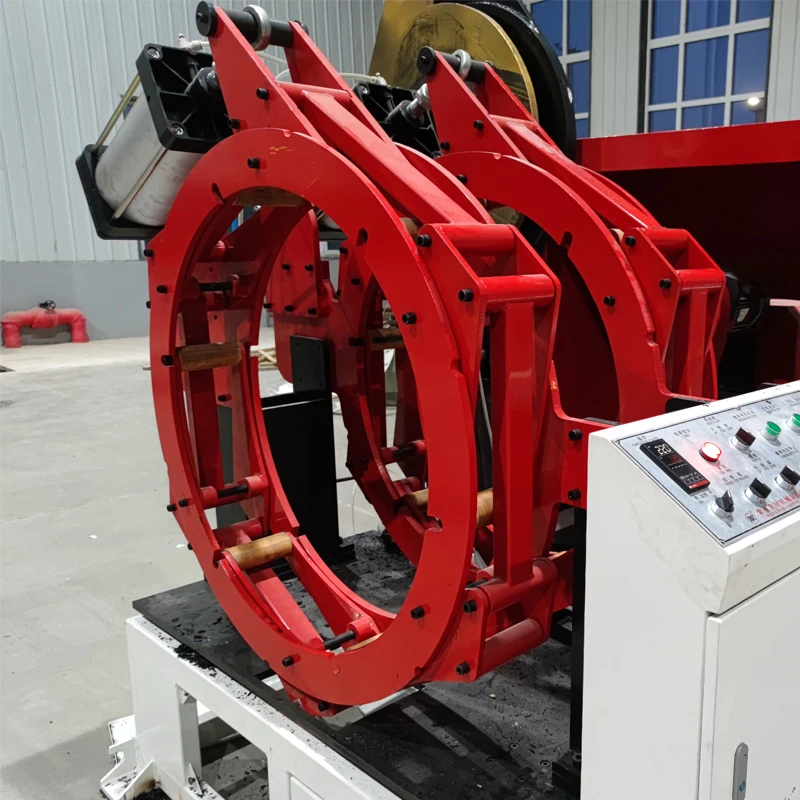
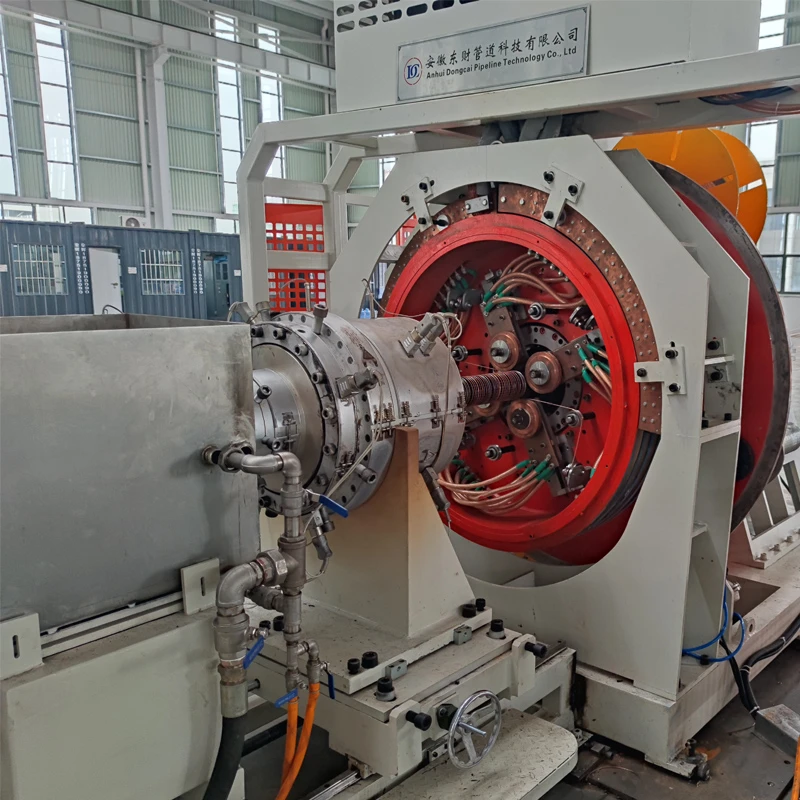
The Steel Skeleton Reinforced Polyethylene Composite Pipe Production Line (SRPE series) produces pipes in which a continuously wound and welded reticulated steel skeleton is encased in a high-density polyethylene (HDPE) matrix. The skeleton is formed by a servo-motor-driven medium-frequency resistance welding machine that creates approximately 360 welding contacts around the full circumference of each layer. 304 stainless steel wire is bent and welded in a single pass, and the spray cooling box — also fabricated from 304 stainless steel — provides 360° dead-angle-free cooling for dimensional stability.
The main extruder uses 40Cr alloy structural steel screws and international first-line-brand electrical components. The PLC-based control system governs the entire line automatically, reducing operator intervention and keeping reject rates low.
This architecture is most applicable when:
- The finished pipe must carry municipal water supply, gas distribution, or industrial pressure-fluid loads that demand a rigid, non-collapsible wall structure.
- The buyer requires a production line where weld quality can be verified in real time (the SRPE welding unit supports real-time weld detection).
- Long service life under cyclic pressure is a priority.
2. Steel Wire Mesh Skeleton — High-Speed Series
The High Speed Steel Wire Mesh Skeleton Reinforced Polyethylene Composite Pipe Production Line uses high-strength steel wire spirally wound left and right to form a mesh skeleton. HDPE modified adhesive resin bonds the skeleton to both the inner and outer HDPE layers, forming an integrated composite structure. Unlike the welded steel frame of the SRPE series, the mesh is formed by spiral winding, making the pipe wall more homogeneous in hoop stress distribution.
Key production features include a vacuum setting box fabricated from 304 stainless steel (bent and welded in one pass, laser-cut internal parts), frequency-converter-controlled spray ports with water temperature constant control, and a fully intelligent automatic sealing machine that unloads finished pipe without on-line guards. Wire replacement does not require a line-speed reduction, which reduces scrap during reel changeover.
This architecture is most applicable when:
- Applications include drainage, ventilation, petroleum pipelines, underground cable protection, centralized water supply, or central heating — all confirmed application fields for this line.
- Municipal engineering, industrial engineering, construction engineering, and sanitary pipelines are the target markets.
- Large-diameter pipe production is required; the wire mesh structure resists rapid cracking that can affect large-diameter pure plastic pipes.
- Adjustable performance parameters (wire diameter, mesh spacing, plastic layer thickness, plastic type) are needed to address varying pressure resistance, temperature resistance, or corrosion resistance requirements across product runs.
3. Fiber Filament (RTP) — Aramid / Glass Fiber Winding
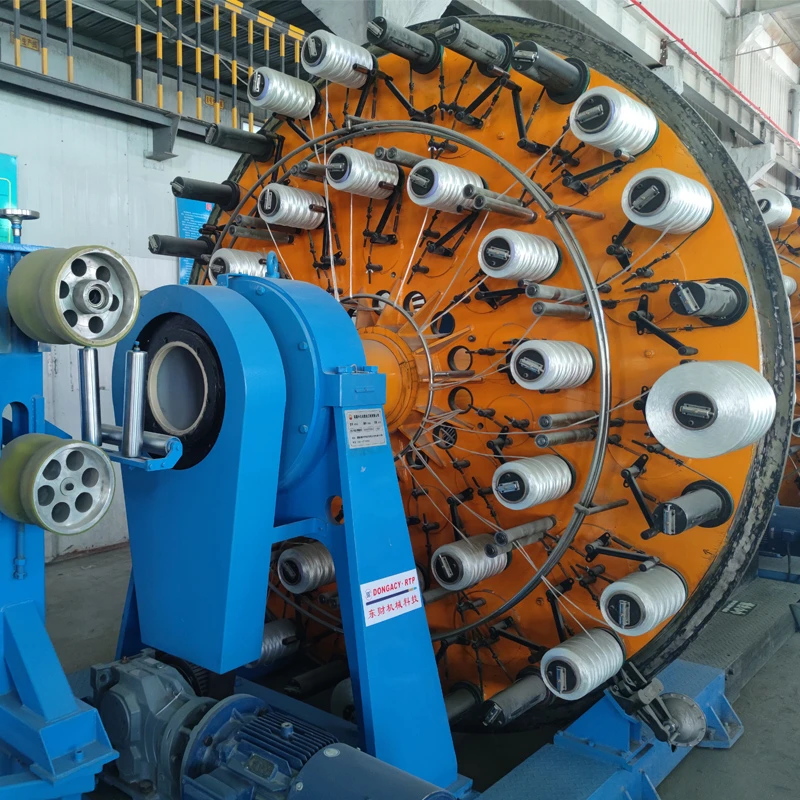
The Fiber Filament Reinforced RTP Polyethylene Composite Pipe Production Line winds aramid or glass fiber filaments onto a molten polyethylene core pipe. A composite molding step closely bonds the fiber reinforcement layer to the PE substrate before cooling and sizing. The result is a thermoplastic composite pipe (RTP) suited to high-pressure, corrosive, or high-temperature fluid transport.
Key confirmed application fields: petroleum, natural gas, chemical industry, and water treatment. In oil and gas, RTP transports oil, gas, water, and chemicals. In chemical service, RTP handles corrosive and high-temperature media.
This architecture is most applicable when:
- The installation environment is aggressive (corrosive chemical media, elevated temperature).
- High-pressure long-distance transport of natural gas or hydrocarbons is required.
- Flexibility under installation is valued: the fiber-reinforced composite pipe maintains flexibility while retaining high strength, allowing routing over complex terrain without additional pipe joints.
4. Tape Winding — Multi-Tape Versatility
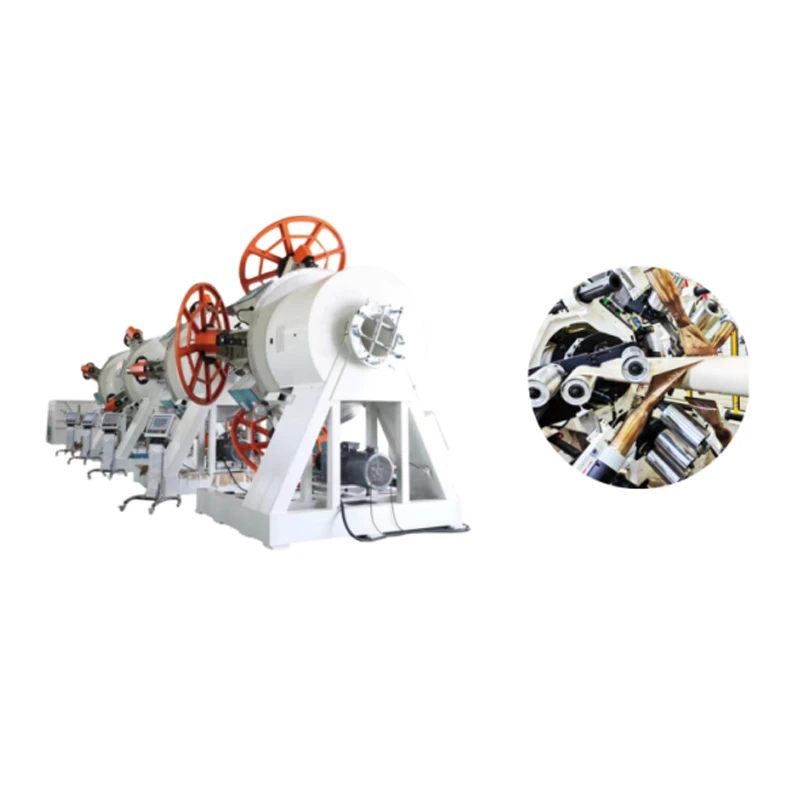
The RTP Tape Winding Reinforced Composite Pipe Production Line winds reinforced tape — which may be glass fiber tape, steel curtain rope tape, steel tape, aramid tape, or polyester tape — spirally onto a plastic core pipe. Bonding is achieved by hot melting or adhesive at and after the winding position. The rotating frame conveys the core pipe forward along the rotation axis while the tape reel releases and winds continuously.
This architecture is most applicable when:
- Oil and natural gas extraction, high-pressure long-distance natural gas transport, or other high-pressure pipeline media transport is the target service.
- Production versatility across tape types is valuable: switching reinforcement tape type adjusts pipe properties without changing the base line configuration.
- High-speed strip winding is preferred for rapid production schedule compliance.
Key Selection Criteria
Criterion 1: Match the Reinforcement Method to the Pipe Application
Each reinforcement architecture produces a structurally different pipe. Before specifying a line:
| Application | Recommended Reinforcement Architecture |
|---|---|
| Municipal water supply / gas | Steel skeleton (SRPE series) or steel wire mesh |
| Petroleum, natural gas, high-pressure transport | Fiber filament RTP or tape winding |
| Drainage, ventilation, cable protection, heating | Steel wire mesh skeleton |
| Corrosive chemical / high-temperature media | Fiber filament RTP |
| Multi-tape flexibility required | Tape winding |
Do not select a line based on pipe diameter or throughput alone. Confirm the finished pipe specification (pressure class, reinforcement type, application standard) before choosing a production line type.
Criterion 2: Assess Automation Level and Production Control Requirements
All confirmed composite pipe lines from Anhui Dongchai Machinery Technology Co., Ltd. use PLC-based automatic control, but automation depth differs by line:
- SRPE steel skeleton line: Fully automatic PLC control; real-time weld detection in the welding process; servo motor for welding mesh forming; 2–12 frequency-conversion tractors.
- Wire mesh skeleton line: Full-intelligent automatic sealing machine; no on-line guard required; wire replacement without speed reduction; variable-frequency-controlled spray ports with constant water-temperature control.
- Fiber RTP line: Integrated control of extrusion, filament winding, composite molding, cooling, cutting, and packaging as a coordinated system.
- Tape winding line: Mechanized and automated control from strip manufacture to winding and forming; parameter control across each production stage.
Buyers with limited skilled operators should weight the automatic sealing, automatic pipe unloading, and real-time detection features when comparing lines.
Criterion 3: Evaluate Structural Material Quality in the Line Itself
Durable production equipment reduces total cost of ownership. Confirmed material specifications across the SRPE and wire mesh lines include:
- 40Cr alloy structural steel screws and dies (resists wear under continuous extrusion duty).
- 304 stainless steel spray and vacuum boxes (bent and welded in one pass; internal components laser-cut for precision fit).
- International first-line-brand electrical components for drives and controls.
- Ceramic heating rings with insulation wrap (fast heating; condenser-equipped gearbox for stable discharge speed).
- Aviation graphite copper carbon brush in the welding unit (SRPE series).
Buyers should request material declarations for screws, barrels, and spray box construction when comparing manufacturers. These components directly affect maintenance frequency and spare-parts lead time.
Criterion 4: Confirm Production Flexibility Needs Before Finalizing Specifications
For buyers who need to adjust pipe grades across production runs:
- The wire mesh skeleton line explicitly supports parameter adjustment — wire diameter, mesh spacing, plastic layer thickness, and plastic type — to tune pressure resistance, temperature resistance, and corrosion resistance within one equipment configuration.
- The tape winding line accepts multiple tape types (glass fiber, steel curtain rope, steel, aramid, polyester), providing product-range flexibility from a single line.
- The SRPE steel skeleton line uses a modular design approach described across the manufacturer’s product family; buyers requiring specific output pipe dimension ranges should verify the tractor configuration (2–12 tractors are referenced) against target pipe diameters.
Which Line Is Right for Your Project?
Choose the Steel Skeleton Reinforced Polyethylene Composite Pipe Production Line (SRPE Series) if:
- Your finished pipe targets municipal water supply, gas distribution, or structural pressure applications.
- Weld quality assurance and real-time weld detection are specified requirements.
- You need a robust, fully automatic line with a long-effective-length 360° cooling spray box and servo-motor-driven skeleton forming.
- 304 stainless steel equipment construction and verified alloy screw materials are procurement requirements.
Choose the High-Speed Wire Mesh Skeleton Line if:
- Your pipe application covers drainage, ventilation, cable protection, centralized water supply, or central heating.
- Large-diameter pipe production is in scope.
- Rapid changeover (no-speed-reduction wire replacement) and automatic pipe unloading are priorities.
- You need to adjust pipe performance parameters across runs without changing the core line configuration.
Choose the Fiber Filament RTP Line if:
- Your market is oil and gas, petrochemical, or industrial fluid transport at elevated pressure or in corrosive environments.
- Pipe flexibility and light weight relative to steel are application requirements.
- The production line must integrate extrusion, filament winding, composite molding, and cooling as a single controlled system.
Choose the Tape Winding Line if:
- High-pressure oil, gas, or long-distance pipeline service is the target.
- You require one line that accepts multiple tape reinforcement materials to produce varied pipe grades.
- High-speed winding throughput and automated strip-to-pipe control are priorities.
What to Verify with the Manufacturer
Before finalizing a purchase decision, the following should be confirmed directly with Anhui Dongchai Machinery Technology Co., Ltd., as these items are not determinable from published product descriptions alone:
- Pipe diameter range supported by the specific line configuration you are evaluating.
- Output capacity (kg/h or m/h) for your target pipe wall thickness and diameter.
- Delivery schedule and installation support arrangements for your project location.
- Applicable standards and certifications
- Spare-parts availability for key wear components (screws, welding contacts, carbon brushes).
- Site utility requirements (power supply, cooling water, floor space) for your facility.
Summary
A composite pipe production line manufacturer selection is ultimately a structural decision: the pipe reinforcement architecture you choose locks in the performance class and application range of every pipe your facility produces. Anhui Dongchai Machinery Technology Co., Ltd. offers a portfolio of confirmed composite pipe production lines — steel skeleton SRPE, wire mesh skeleton, fiber filament RTP, and tape winding — each suited to a defined application domain. Match the reinforcement method to your target pipe application first, then evaluate automation depth, equipment material quality, and production flexibility to narrow the specification. Engage the manufacturer directly for capacity, delivery, certification, and site-specific details before committing to a configuration.
THE PEOPLE

About the author
THE COMPANY
Anhui Dongchai Machinery Technology Co., Ltd.
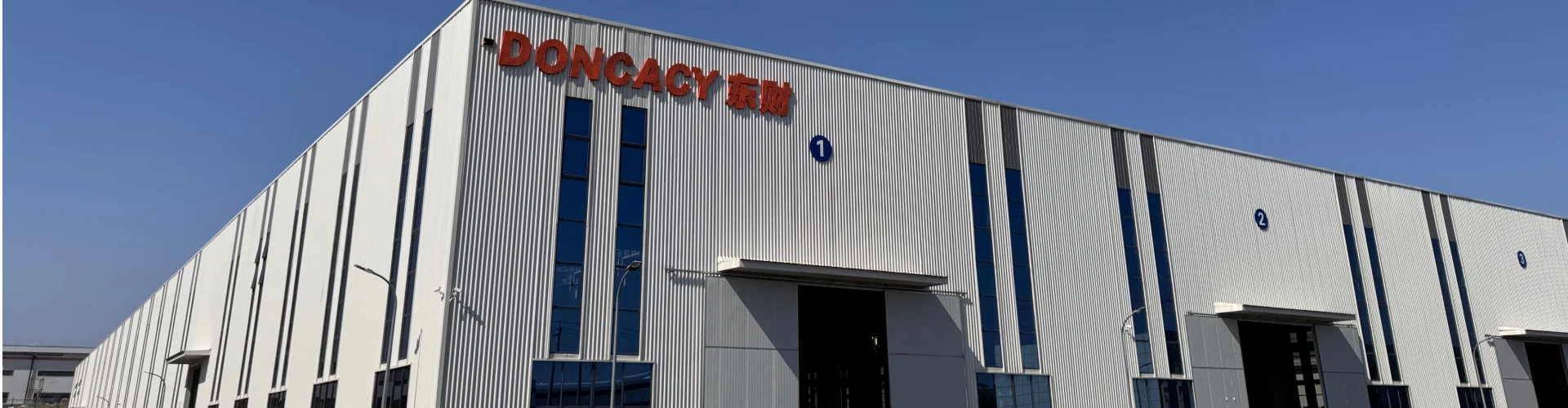
Anhui Dongcai Machinery Technology Co., Ltd. (hereinafter referred to as Dongcai Machinery), located in Chuzhou, Anhui Province, is a world-famous treasure trove of mountains and rivers. The address is located in Chuzhou Economic and Technological Development Zone, Anhui Province, adjacent to the historic city of Nanjing.…
About Us ↗Visit company website ↗YOUR NEXT STEP
Bring your brief. Start a useful conversation.
Use case, specification, quantity and delivery window: make the next conversation specific.
-
Polyethylene Pipe Production Line: Multi-Layer or High-Speed Mesh Configuration?NewsNov.03,2026
-
Comparing High Speed Pipe Extrusion Line Options: HDPE Solid Wall vs. Multi-Model SystemsNewsOct.30,2026
-
High Performance PP Extrusion Machine Guide for Plastic ProductionNewsJul.01,2026
-
High Efficiency Industrial Recycled Plastic Extrusion Machine GuideNewsJun.29,2026
-
Optimize Industrial Production with Wire Extrusion MachineNewsJun.27,2026
-
High Precision Extrusion Cutting Machine for Plastic ProductionNewsJun.26,2026
-
Comprehensive Guide to Efficient PVC Extrusion Machine UseNewsJun.25,2026


