
An overplastic production line is a complete set of equipment designed to extrude a protective plastic layer over a base material such as cable, pipe, or metal rod. The process begins with raw plastic granules—such as PVC, PE, or TPU—being fed into an extruder. Inside the extruder, the material is melted and homogenized by a rotating screw under carefully controlled heating zones.
The molten plastic is then forced through a specialized extrusion die. Unlike standard extrusion, the die is designed to allow the plastic to flow around the substrate, fully encapsulating or coating it. This creates a uniform over-jacket layer with excellent adhesion and consistency.
Once coated, the product passes through cooling tanks where water or air stabilizes the plastic layer. After cooling, haul-off equipment maintains a constant pulling speed to ensure thickness uniformity. An automatic cutting or winding system then prepares the final product for packaging.
Overplastic production lines are highly versatile and can produce a wide range of coated products, including electrical cables with insulation jackets, steel pipes with corrosion-resistant coatings, and plastic-coated steel wires for fencing or construction. With advanced PLC control and precision temperature management, these lines deliver stable quality, high production efficiency, and long-term durability of coated products.
-
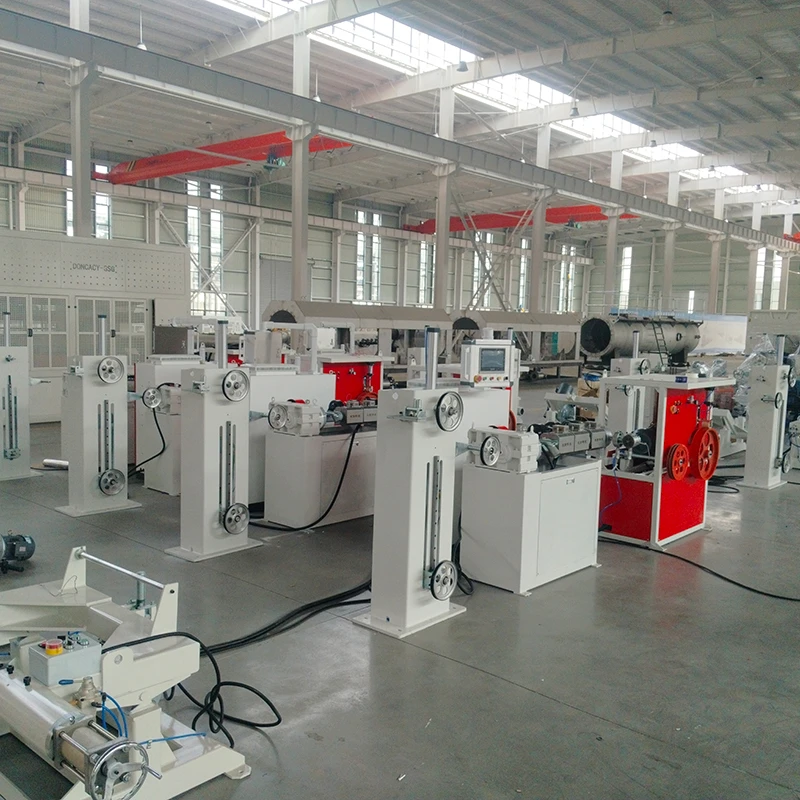 Overplastic Production LinePlastic production line is a production process for wrapping a layer of plastic materials (such as PE, PVC, etc.) on the surface of steel wires of various materials.
What Materials Can Be Processed In An Overplastic Production Line?
Overplastic production lines are capable of processing a variety of thermoplastic materials depending on the application requirements. Commonly used materials include:
-
PVC (Polyvinyl Chloride): Popular for cable jackets and pipe coatings due to its flexibility, flame resistance, and cost-effectiveness.
-
PE (Polyethylene): Provides excellent chemical resistance, durability, and weatherproofing, widely used in pipe coatings and outdoor cable applications.
-
TPU (Thermoplastic Polyurethane): Offers superior elasticity, abrasion resistance, and toughness, making it ideal for high-performance cables and flexible protective covers.
-
PP (Polypropylene): Often used where lightweight, chemical resistance, and high stiffness are required.
-
EVA (Ethylene-Vinyl Acetate): Used for specialized coating applications where flexibility and shock absorption are important.
In addition, overplastic production lines can be adapted for multi-layer extrusion, combining different polymers to enhance specific properties such as UV resistance, flame retardancy, or mechanical strength.
By simply changing the extrusion die, screw design, and processing parameters, manufacturers can coat different substrates—such as wires, tubes, rods, or composite materials—using the same line. This versatility makes the overplastic production line a cost-effective solution for diverse industrial applications.
What Are The Advantages Of Using An Overplastic Production Line?
The main advantage of an overplastic production line is its ability to enhance the performance and lifespan of base materials by applying a protective plastic layer. For example, when applied to cables, the coating improves insulation, fire resistance, and environmental durability. For pipes and steel wires, the coating provides corrosion resistance, UV stability, and mechanical protection.
Another benefit is production flexibility. Modern overplastic lines can process multiple polymer types and produce coatings of varying thicknesses, meeting the needs of different industries. Some lines also support co-extrusion, enabling the production of multi-layer jackets that combine unique material properties.
Overplastic production lines also feature automation and precision control. PLC-based systems monitor temperature, pressure, and coating thickness in real time, ensuring consistent quality while reducing waste.
In terms of economics, they offer cost efficiency and scalability. By extending the service life of products and reducing maintenance requirements, overplastic-coated products help end-users save on long-term costs. Manufacturers also benefit from higher productivity, energy efficiency, and reduced raw material waste.
Overall, these production lines provide industries with durable, safe, and high-performance coated products, making them a strategic investment for cable manufacturers, pipe producers, and composite material companies.
How To Choose The Right Overplastic Production Line For Your Business?
Selecting the right overplastic production line requires careful evaluation of your product goals, market demands, and technical needs.
First, identify the type of substrate you plan to coat. For cable production, you may require a line with precise diameter control and flame-retardant material capability. For pipe or wire coating, a line with stronger cooling and larger haul-off capacity might be more suitable.
Second, consider the materials you intend to process. Lines designed for PVC may differ from those optimized for PE, TPU, or multi-layer coatings. Choosing a machine with versatile screw and barrel design allows greater flexibility.
Third, evaluate the production capacity. Depending on your market size, you may need a small-scale line for custom products or a high-speed industrial line for mass production.
Fourth, automation and control systems are essential. A line with advanced PLC control, automatic fault detection, and real-time monitoring minimizes downtime and ensures consistent product quality.
Finally, partner with a reliable supplier who provides installation, training, spare parts, and long-term technical support. This ensures smooth operation and protects your investment.
By balancing these factors, you can select an overplastic production line that delivers high efficiency, quality, and profitability for your manufacturing business.
-


