
Plastic Profile Production Line: A Backbone of Modern Manufacturing
In an age where materials shape our world, understanding the plastic profile production line is pretty key to grasping how industries meet growing demands for versatility and efficiency. These production lines aren’t just about churning out plastic parts; they’re critical in everything from construction to electronics. Whether you’re an engineer, a procurement manager, or simply a curious bystander, getting a handle on how these lines operate opens a window into modern manufacturing innovation.
Quick takeaway: Plastic profile production lines streamline the fabrication of complex plastic shapes, ensuring consistent quality and supporting a wide span of industries worldwide.
Why the Plastic Profile Production Line Matters Globally
Look around: the global plastic market just keeps expanding. According to the World Bank, plastic production has increased roughly fourfold since the 1980s, reaching over 350 million tonnes annually. The UN Environment Programme warns of sustainability concerns, but meanwhile, industries rely on plastic profiles to build everything from window frames to medical devices.
However, producing these profiles at scale and quality isn’t a trivial challenge. That’s where the plastic profile production line comes in—it enables manufacturers to meet international standards (like those set by ISO for plastic extrusions) while reducing waste and energy consumption. Oddly enough, it’s a field where precision engineering meets sustainability goals.
Mini summary: The global plastic profile production line bridges the increasing demand for plastic components with the need for efficiency and environmental responsibility.
Defining the Plastic Profile Production Line
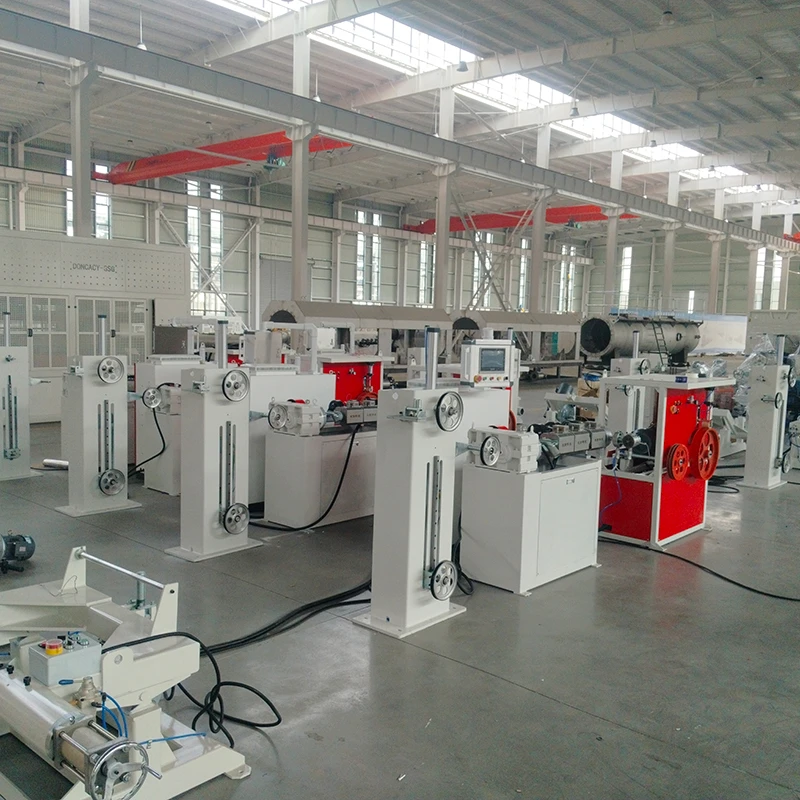
Simply put, a plastic profile production line is a set of interconnected machines that take raw plastic materials and shape them into long, continuous profiles—like tubes, rails, or frames—through processes such as extrusion. Think of it as a conveyor of plastic transformation, where resin pellets feed in at one end, and customized shapes emerge at the other.
These lines serve industries ranging from construction — supplying window frames and door seals — to automotive and consumer goods. In humanitarian applications too, plastic profiles help build lightweight shelters or modular elements, crucial for speedy deployment in disaster zones.
Key Components of a Plastic Profile Production Line
- Extruder: Melts and pushes the plastic through a precisely designed die to form the desired profile. The heart of the line.
- Die Head: Shapes the melted plastic; custom-designed per product to create specific cross-sections.
- Calibration & Cooling System: Maintains dimensional accuracy by cooling the profile uniformly, often using water tanks or air systems.
- Haul-off Unit: Pulls the plastic profile at a controlled speed—too fast or slow and quality suffers.
- Cutting or Winding Station: Finishes the profile by cutting it to length or coiling it on spools for transport.
- Control System: Automated monitoring for temperature, pressure, speed—essential for consistent output.
Mini takeaway: Each part of the production line works in harmony to deliver precise, durable, and scalable plastic profiles.
Who’s Using Plastic Profile Lines and Where?
From bustling industrial hubs in China’s Pearl River Delta to European factories in Germany’s Baden-Württemberg, plastic profile production lines hum quietly in the background, driving diverse economies. Construction companies use profiles for window and door frames; automotive manufacturers rely on them for lightweight trims that improve fuel efficiency.
In remote or developing regions, NGOs utilize these plastic profiles to fabricate temporary housing and relief structures, tapping into the lines’ capacity for fast, repeatable production. Even vertical farming outfits now depend on sturdy plastic profiles for their greenhouses and plant supports.
- Post-disaster relief operations: Quick assembly of modular shelters.
- Electronics: Insulated enclosures and casings.
- Transportation: Lightweight, durable interior trims.
- Retail fixtures: Durable shelving and display units.
Mini takeaway: Plastic profile production lines underpin solutions that stretch from commercial to humanitarian realms.
Advantages and Long-Term Value of Plastic Profile Production
What’s really compelling is how these production lines combine cost efficiency with innovation. They cut down manual labor, reduce scrap, and can handle complex shapes that traditional molding rejects. Plus, many lines now offer energy-saving features, aligning with green initiatives. The long-term benefits? Beyond price, they foster safety and dignity—especially when the profiles contribute to secure housing or medical device casings.
Engineers often highlight the trust factor: consistent quality means less worry about product failure, enhancing brand reputation and user confidence.
Plastic Profile Production Line — A Specification Overview
| Specification | Typical Value | Notes |
|---|---|---|
| Output Capacity | 100-600 kg/hr | Depends on resin and profile complexity |
| Heating Zones | 5-8 zones | Critical for temperature control |
| Profile Width Range | 5 mm – 400 mm | Custom dies allow variations |
| Power Consumption | 10-50 kW | Varies with line size and speed |
| Automation Level | Semi to full | Improves consistency and reduces manpower |
Choosing the Right Vendor: A Quick Comparison
| Vendor | Automation Features | Product Range | Global Support | Price Range |
|---|---|---|---|---|
| Alpha Extrusions | Full automation with IoT controls | Window frames, pipes, sheets | Extensive (Americas, EMEA, Asia) | $$$ |
| Beta Plast Tech | Semi-automated with manual override | Custom profiles, small batch runs | Regional (Europe, Middle East) | $$ |
| Gamma Lines Co. | Basic automation, cost-effective | Industrial profiles, agricultural uses | Local (Asia Pacific) | $ |
Looking Ahead: Innovations in Plastic Profile Production
The future is bright — and green. New materials like bio-based resins and recycled feedstocks promise to reduce the environmental footprint of profiles. Digital twins and AI-powered controls are becoming the norm, enabling predictive maintenance and real-time quality tweaks. Automation maturity is pushing the limits of speed and consistency, while energy-efficient motors and heating systems make operations more sustainable.
Plus, the rise of circular economy policies means manufacturers increasingly focus on recyclability and end-of-life reuse. It’s fascinating to watch how this traditionally “analog” sector embraces cutting-edge tech.
Common Challenges and How Experts Solve Them
No system is perfect, especially in plastic profile production. Some challenges include:
- Material inconsistencies: Feedstock quality varies, causing defects.
- Thermal management issues: Uneven cooling distorts profiles.
- Line downtime: Maintenance complexity can slow production.
Veteran engineers recommend tighter vendor specs, implementing robust inline sensors, and conducting regular thermal mapping. Modular designs that allow quick die swaps and easy cleaning cuts downtime dramatically. Frankly, it sometimes feels like a dance balancing speed and precision.
Frequently Asked Questions About Plastic Profile Production Lines
- Q1: What types of plastics can a profile production line handle?
- A1: Most lines are designed to process common thermoplastics such as PVC, PE, PP, and ABS. With specific temperature controls and dies, some lines can also handle engineering plastics like polycarbonate or nylon for specialized applications.
- Q2: How customizable are plastic profile production lines?
- A2: Very customizable. Dies can be tailored to form virtually any cross-sectional shape. Automation levels, line speed, and cooling methods can also be adjusted to match client requirements and product specifications.
- Q3: How does automation improve production?
- A3: Automation enhances consistency by precisely controlling temperature and speed, reducing human error. It also enables real-time monitoring, which helps in predictive maintenance and reduces downtime.
- Q4: Can these production lines incorporate recycled plastics?
- A4: Yes, many manufacturers now design lines to process recycled or blended feedstocks. However, consistent quality control and proper pre-treatment are essential to avoid defects.
- Q5: What industries benefit most from plastic profile production lines?
- A5: Construction, automotive, electronics, agriculture, and even humanitarian relief sectors heavily rely on these lines for components ranging from window frames to modular shelter parts.
Wrapping Up: Why the Plastic Profile Production Line Deserves Your Attention
The plastic profile production line is more than a manufacturing process—it’s a vital cog in the modern economy’s machinery. From improving infrastructure durability to enabling faster shelter construction after disasters, it impacts both industrial and human landscapes. Its role in supporting efficient, scalable, and increasingly green manufacturing underscores why expertise in this area is invaluable.
If you’re considering investing in or upgrading your production capabilities, dive deeper into what cutting-edge lines offer. For a thorough look at industry-leading options, check out plastic profile production line solutions that fit your scale and purpose.
Thanks for sticking around. It feels like there’s always more to discover beneath the surface of extruded plastic profiles... but I suppose that’s part of the fascination.
References
-
High Efficiency PE Extrusion Line Guide for Plastic ManufacturingNewsApr.16,2026
-
High Speed Steel Wire Mesh HDPE Composite Pipe Production Line - Anhui Dongchai|High Automation&Energy EfficiencyNewsApr.13,2026
-
High Speed Steel Wire Mesh HDPE Composite Pipe Production Line - Anhui Dongchai|High Automation&Energy EfficiencyNewsApr.13,2026
-
Guide to Choosing High Efficiency ppr pipe extrusion machineNewsApr.09,2026
-
Comprehensive Guide to Modern Pipe Production Line Technologies and OptimizationNewsApr.07,2026
-
Choosing the Right Extrusion Pipe Machine for Optimal Plastic Pipe ProductionNewsApr.04,2026
-
Comprehensive Guide to PPR Pipe Extrusion Line Technology and ApplicationsNewsMar.31,2026


