
Medical Tube Extrusion Line: The Backbone of Modern Medical Manufacturing
When you think about the delicate tubing that delivers life-saving fluids, or the catheters that help countless patients daily, chances are those components were born on a medical tube extrusion line. Although the phrase might sound technical or even a little dull, this production line drives a major part of the global medical device industry. It matters because it enables scalable, cost-effective manufacturing of high-precision tubes essential for diagnostics, treatment, and patient care worldwide.
Understanding this topic isn’t just for engineers or factory managers—it’s for anyone curious how technology quietly improves health outcomes everywhere, from five-star hospitals in Tokyo to mobile clinics in remote valleys.
The Global Story Behind Medical Tube Extrusion Lines
Globally, healthcare continues expanding at an unprecedented pace. The World Health Organization reports rigorous demands for safe medical devices, including small-diameter tubing, are rising by roughly 7% annually.1 At the heart of meeting this surge are medical tube extrusion lines, specialized machinery designed to produce biocompatible, precisely calibrated tubes made from polymers like silicone, polyurethane, or PVC.
These lines don’t just churn out tubes—they help address challenges like infection control, device reliability, and supply chain resilience that traditional manufacturing sometimes struggles with. For example, during the Covid-19 pandemic, the need for ventilator tubing skyrocketed... and extrusion lines played a vital role in rapidly scaling production.
Mini takeaway:
- Medical tube extrusion lines underpin global medical supply chains.
- Demand growth driven by healthcare expansion and emergencies.
What Actually Is a Medical Tube Extrusion Line?
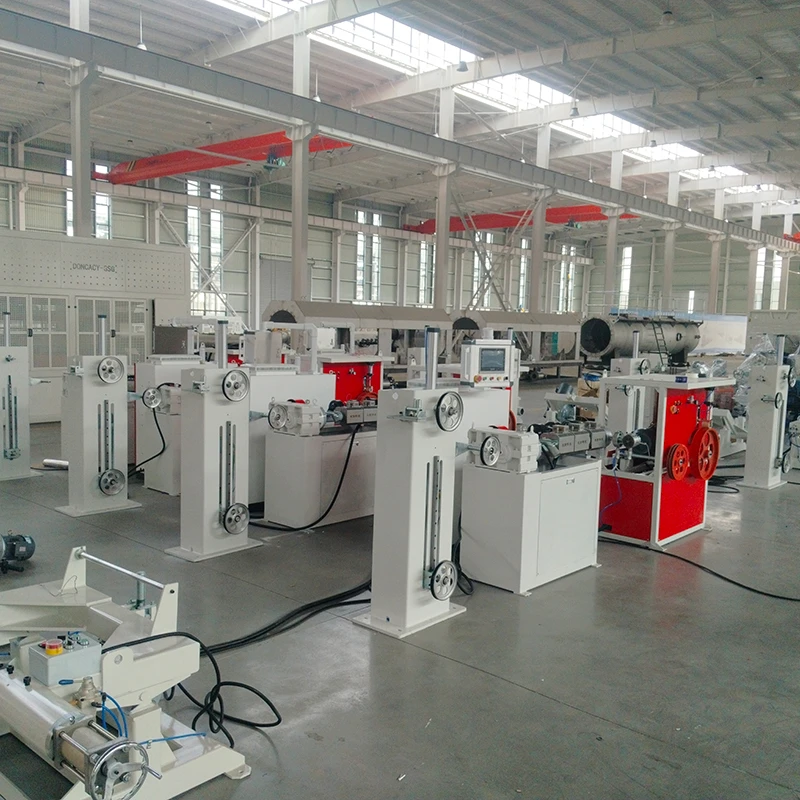
At its core, a medical tube extrusion line is a continuous production system that melts plastic pellets and forces the molten polymer through a shaped die, creating tubes with exact diameters and wall thicknesses. Think of it as an industrial pasta machine, but for ultra-precise, flexible medical tubing.
These lines often include additional components—pullers, calibration tanks, cooling baths, and winding stations—to ensure the tube cools evenly, retains shape, and is cleanly collected. In medical applications, “clean” means sterilizable, endotoxin-free, and compliant with regulatory standards such as ISO 13485.
So, this is the place where raw polymer transforms into the lifelines of countless therapies. It’s fascinating how such an automated, seemingly simple process connects to deeply human outcomes.
Mini takeaway:
- Medical tube extrusion lines convert raw polymers into sterile, precision tubing.
- Each step from extrusion to winding ensures medical-grade quality.
Key Factors That Define a Medical Tube Extrusion Line
1. Precision & Quality Control
Medical tubes often have wall thicknesses less than a millimeter, requiring tight dimensional tolerances. Many extrusion lines integrate advanced laser gauge systems and on-line cameras to monitor diameter consistency in real-time.
2. Material Compatibility
These lines cater to sensitive polymers like silicone, thermoplastic elastomers, or fluoropolymers. Temperature and extrusion speed must be finely tuned to avoid degrading medical-grade materials.
3. Sterility & Cleanroom Design
Modern extrusion lines for medical tubing often occupy controlled environments to limit contamination. Sometimes, additional sterilization steps happen inline to assure product safety.
4. Scalability & Throughput
Balancing output speed with quality is challenging. Machines must handle runs from hundreds of meters for prototypes to thousands for mass production.
5. Automation & Customization
Increasingly, extrusion lines are automated for efficiency, including automated tension control, tube marking, and packaging. Plus, customization options allow production of single-lumen or multi-lumen tubes for various medical devices.
| Specification | Typical Range | Notes |
|---|---|---|
| Tube Diameter | 0.5mm – 10mm | Microscopic to macro tubing |
| Wall Thickness | 0.05mm – 1.5mm | Critical for flexibility and strength |
| Line Speed | 3 – 20 m/min | Balancing throughput & quality |
| Materials | Silicone, PU, PVC, PTFE, TPU | Medical-grade polymers |
| Automation Level | Manual to Full PLC Control | Customizable per application |
Mini takeaway:
- Precision, material care, and sterility dominate line design.
- Automation increasingly helps balance speed with quality control.
Worldwide Applications & Real-World Use Cases
Medical tubes are everywhere—whether in IV sets, catheters, respiratory devices, or surgical tools. Countries with growing medical infrastructure, especially in Asia-Pacific and Europe, are investing heavily in extrusion capabilities to meet both domestic demand and international standards.
For instance, during post-disaster relief operations, emergency medical kits include sterile tubing and catheters produced by these lines. In remote industrial zones, mobile clinics equipped with on-demand tubing have proven essential for basic healthcare delivery.
Major hospitals in the U.S. and EU rely on tubing produced by these lines for minimally invasive surgeries and long-term implants. The tubes’ quality directly affects device performance, patient safety, and regulatory approvals—no pressure there, right?
Mini takeaway:
- From emergency relief to advanced surgery, medical tube extrusion lines serve diverse sectors.
- Demand spans regions with varying health infrastructure and needs.
Advantages & Sustainable Value of Medical Tube Extrusion Lines
On paper, these lines cut costs by automating complex tube production, reducing waste, and ensuring higher yields. But there’s a bigger story—these lines promote safer, more reliable medical devices that protect patient dignity and life, which can hardly be measured just in dollars.
Environmentally, manufacturers increasingly adopt recycled polymers and green energy to power extrusion facilities, responding to global calls for sustainable healthcare manufacturing documented by the International Organization for Standardization (ISO). Trust builds when devices are made not only safely but sustainably.
It’s like giving medical teams a versatile toolkit that will never fail them—tubes that flex, resist kinking, and maintain sterility—built line after line, day after day.
Looking Ahead: Innovations in Medical Tube Extrusion
Exciting things are on the horizon. Advances in extrusion technology now include AI-driven process optimization, which minimizes defects and customizes tube properties on the fly. New materials such as bioresorbable polymers promise to revolutionize implant tubing that dissolves in the body after use.
Furthermore, automation combined with inline sterilization is becoming commonplace, as companies aim for zero-touch production lines—meaning less human contact, fewer contamination risks, and faster turnaround times. Plus, some innovators are integrating medical tube extrusion line platforms with digital twins for remote monitoring and predictive maintenance.
Challenges & Practical Solutions in Medical Tube Production
Despite all the tech, these lines aren’t without hiccups. Polymer degradation, micro-bubbles in tubes, and difficulty maintaining sterile conditions remain common pain points. Still, many engineers say combining real-time sensors with adaptive control systems hugely improves output quality.
Another challenge: sourcing medical-grade materials, especially during supply chain disruptions. Some manufacturers now stockpile or switch to polymer blends that retain performance but reduce dependency on scarce sources.
| Vendor | Automation Level | Material Support | Customization Options | Global Reach |
|---|---|---|---|---|
| MedTube Tech | Fully Automated PLC | Wide (Silicone, PU, TPU) | Single & Multi-lumen | Asia, Europe, N America |
| FlowLine Systems | Semi-Automated | Focused on PVC & PTFE | Standard Tubing Profiles | Europe, S America |
| PureTube Inc. | Manual to Semi-Automated | Medical Silicone Specialist | High Customization | Global |
FAQ: Medical Tube Extrusion Line Essentials
- Q1: How do medical tube extrusion lines ensure sterility of the tubing?
- Most lines operate within cleanroom environments and utilize sterilizable materials. Additionally, inline sterilization methods such as UV or gamma irradiation can be integrated post-extrusion to maintain sterility before packaging.
- Q2: Can medical tube extrusion lines handle custom tube shapes like multi-lumen?
- Yes. Specialized extrusion dies allow production of multi-lumen tubes with multiple channels. This versatility supports devices like catheters or drainage tubes requiring complex internal structure.
- Q3: What are the main polymers used, and why?
- Silicone, polyurethane (PU), PVC, and PTFE are commonly used due to their biocompatibility, flexibility, and chemical resistance. Selection depends on intended use, such as implantable devices or external tubing.
- Q4: How scalable are medical tube extrusion lines for small vs large production runs?
- Lines are designed to be flexible: smaller, manual or semi-automated setups suit prototyping or low volume, while fully automated lines efficiently handle high-volume long runs with consistent quality.
- Q5: Are there environmental considerations in medical tube extrusion?
- Definitely. Many manufacturers embed energy-efficient components, recycle scrap materials, and use greener polymers to minimize environmental footprint while maintaining stringent medical standards.
Wrapping it up: Why Medical Tube Extrusion Lines Matter Long-Term
To sum it all, a medical tube extrusion line is far more than a manufacturing tool—it’s a critical cog in the vast, intricate machinery of healthcare. The tubes it makes are delicate conduits of life, enabling complex treatments and emergency responses worldwide.
For producers and buyers alike, focusing on quality, innovation, and sustainability in tube extrusion means investing in patient safety and operational reliability. Interested professionals should definitely explore detailed specs, talk with vendors, and maybe even tour a line or two to really appreciate the craftsmanship beneath those smooth polymer tubes.
Ready to learn more or enhance your medical tubing capabilities? Visit https://www.ahdc11.com for cutting-edge medical tube extrusion line solutions.
References
- World Health Organization (WHO), "Medical Devices: Essential Technology for Saving Lives," 2023.
- ISO 13485:2016 — Medical devices — Quality management systems — Requirements for regulatory purposes.
- United Nations Industrial Development Organization (UNIDO), "Medical Device Industry Growth Trends," 2022.
-
High Efficiency PE Extrusion Line Guide for Plastic ManufacturingNewsApr.16,2026
-
High Speed Steel Wire Mesh HDPE Composite Pipe Production Line - Anhui Dongchai|High Automation&Energy EfficiencyNewsApr.13,2026
-
High Speed Steel Wire Mesh HDPE Composite Pipe Production Line - Anhui Dongchai|High Automation&Energy EfficiencyNewsApr.13,2026
-
Guide to Choosing High Efficiency ppr pipe extrusion machineNewsApr.09,2026
-
Comprehensive Guide to Modern Pipe Production Line Technologies and OptimizationNewsApr.07,2026
-
Choosing the Right Extrusion Pipe Machine for Optimal Plastic Pipe ProductionNewsApr.04,2026
-
Comprehensive Guide to PPR Pipe Extrusion Line Technology and ApplicationsNewsMar.31,2026


