
HDPE Pipe Extrusion is the core process for producing high-density polyethylene (HDPE) pipes, a technology that melts HDPE resin and shapes it into continuous, uniform pipes through precise extrusion. This process is renowned for its ability to create pipes with excellent chemical resistance, impact strength, and flexibility, making the end products suitable for a wide range of applications. Unlike other pipe manufacturing methods, HDPE Pipe Extrusion enables continuous production, which significantly boosts efficiency and ensures consistent quality across each pipe length. The process typically involves feeding HDPE pellets into an extruder, where they are heated and melted, then pushed through a die to form the desired pipe shape, followed by cooling, sizing, and cutting to meet specific length requirements. HDPE Pipe Extrusion also allows for adjustments in pipe diameter, wall thickness, and pressure rating, making it adaptable to diverse project needs.
HDPE Pipe Extrusion relies heavily on specialized Extrusion Pipe Machine to achieve smooth and efficient production
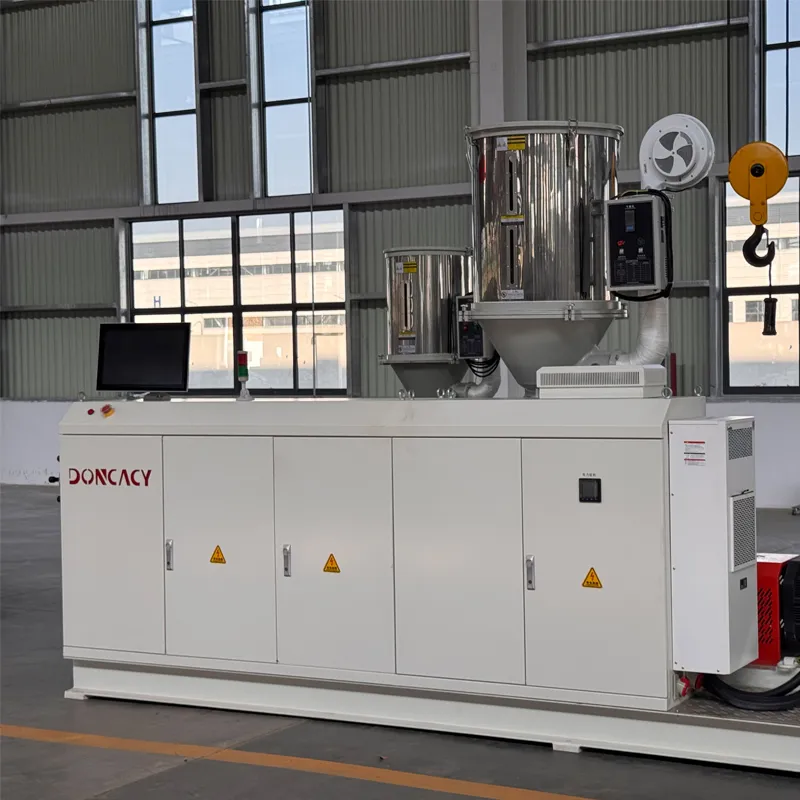
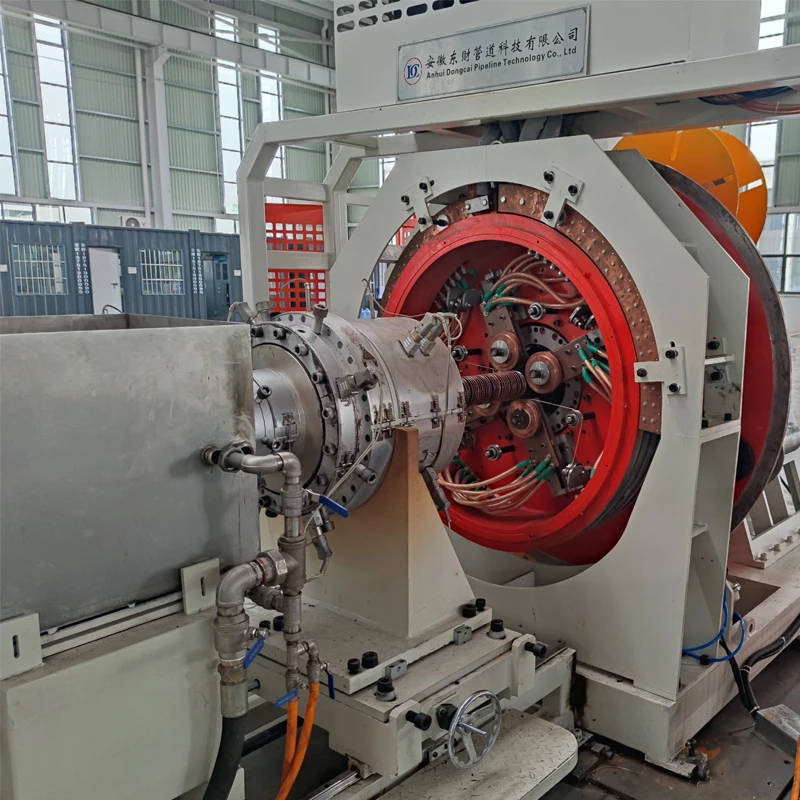
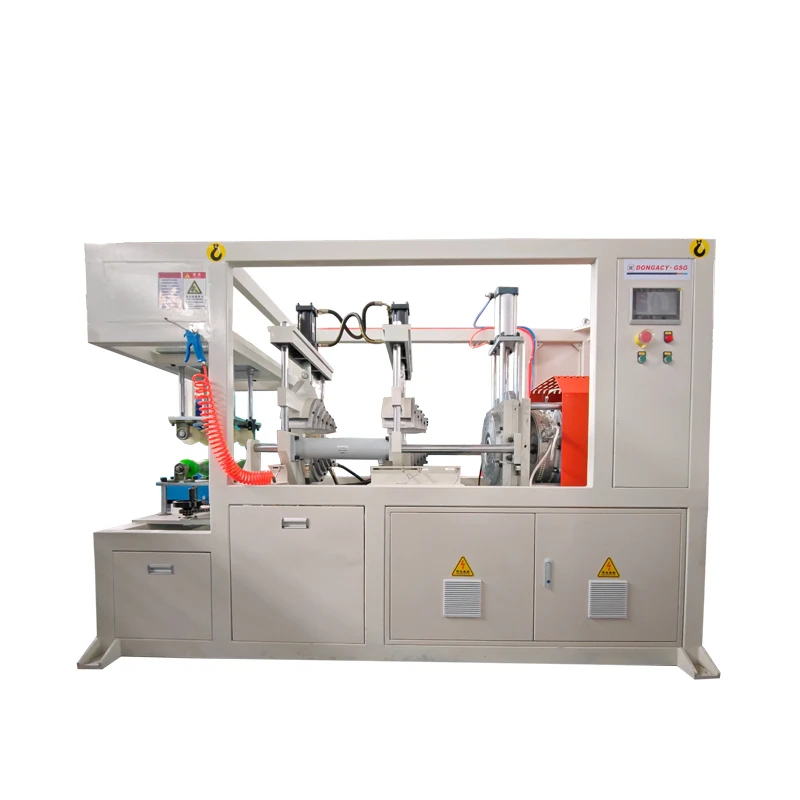
An Extrusion Pipe Machine is a integrated unit that combines a screw extruder, die head, cooling system, sizing device, and haul-off unit—all essential for transforming raw HDPE resin into finished pipes. The screw extruder in the machine is designed to convey, melt, and homogenize HDPE pellets, with temperature zones carefully controlled to prevent overheating or uneven melting. The die head, a critical component of the Extrusion Pipe Machine, determines the pipe’s inner and outer diameter; it is crafted with precision to ensure the pipe wall thickness is uniform, a key factor in maintaining the pipe’s structural integrity. Additionally, the cooling system in the Extrusion Pipe Machine uses water or air to quickly solidify the extruded pipe, while the haul-off unit pulls the pipe at a steady speed to match the extrusion rate, preventing deformation.
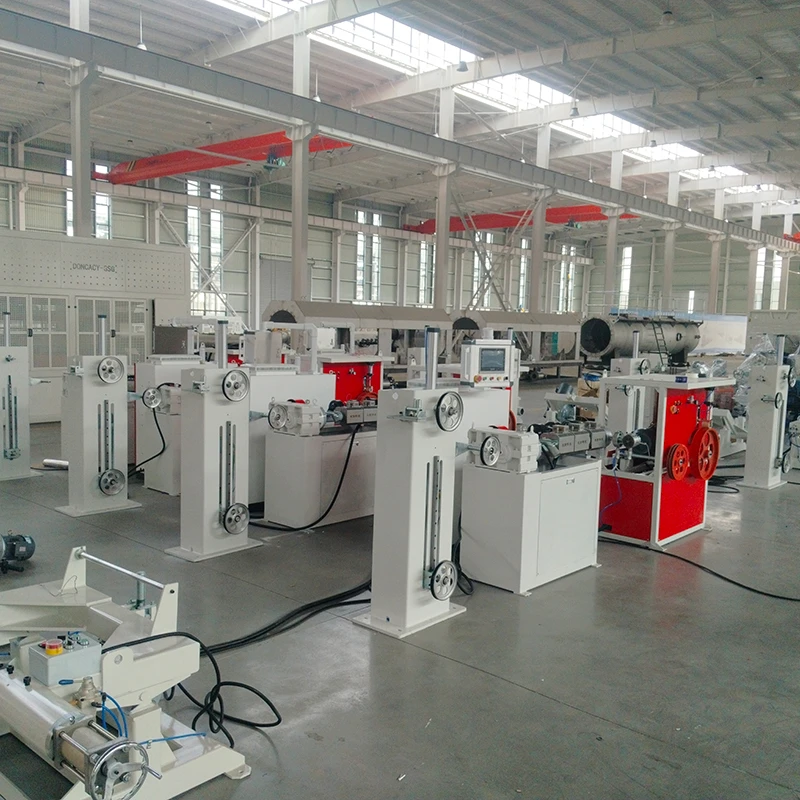
A complete Pipe Production Line integrates HDPE Pipe Extrusion, Extrusion Pipe Machine, and other auxiliary equipment to form a seamless manufacturing workflow
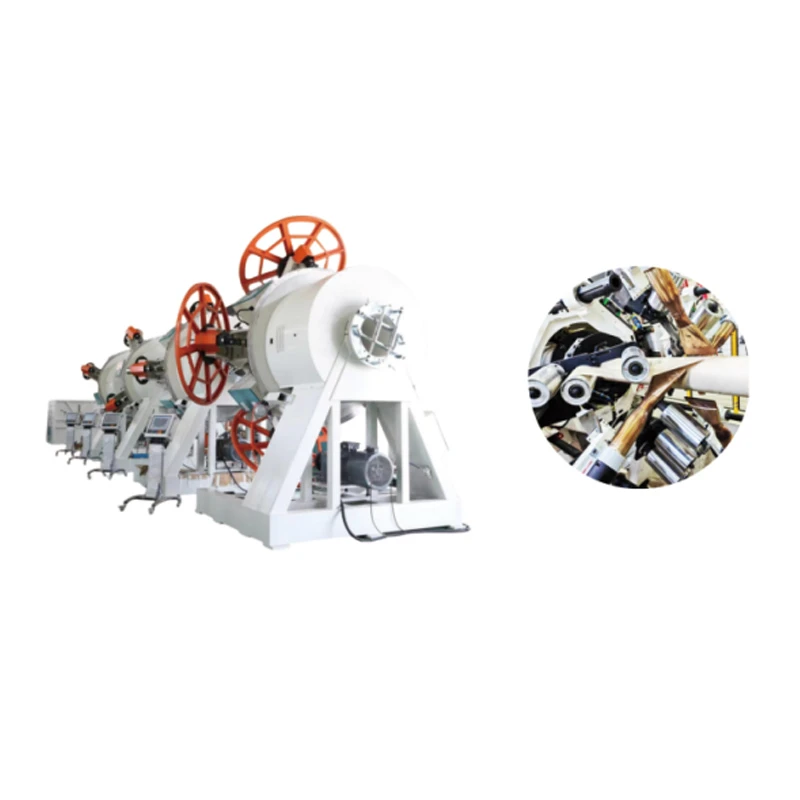
This line typically starts with a material feeding system that delivers HDPE pellets to the Extrusion Pipe Machine, followed by the extrusion process, then moves to a sizing tank that uses internal pressure or vacuum to refine the pipe’s dimensions. After sizing, the pipe enters a cooling tank to stabilize its shape, and a haul-off machine pulls it forward before a cutting machine trims it to the required length. Some advanced Pipe Production Line setups also include a printing unit to add product information (such as diameter, pressure rating, and material) and a coiling machine for flexible HDPE pipes. The products of this production line are used in water supply, drainage, chemical industry, ventilation and communication, and are widely used in municipal engineering, industrial use, agricultural irrigation, construction engineering and communication fields.
PPR Pipe Extrusion Machine is a specialized type of Extrusion Pipe Machine designed for producing polypropylene random copolymer (PPR) pipes, often used in conjunction with HDPE Pipe Extrusion lines in facilities that manufacture multiple pipe types
While HDPE Pipe Extrusion focuses on polyethylene, PPR Pipe Extrusion Machine is optimized for PPR resin, which has higher heat resistance—making PPR pipes ideal for hot water supply systems. The structure of a PPR Pipe Extrusion Machine is similar to that of an HDPE-focused Extrusion Pipe Machine, but it features adjusted temperature controls to accommodate PPR’s higher melting point (around 160–170°C, compared to HDPE’s 130–140°C). Some manufacturers integrate both HDPE and PPR capabilities into a single Pipe Production Line, allowing for quick switching between materials by adjusting the Extrusion Pipe Machine’s parameters and die heads.
PE Extrusion Line is a broader term that encompasses HDPE Pipe Extrusion lines and is tailored for producing various polyethylene (PE) pipes, including low-density polyethylene (LDPE) and linear low-density polyethylene (LLDPE) pipes, in addition to HDPE. A typical PE Extrusion Line shares core components with a dedicated HDPE Pipe Extrusion setup but offers greater flexibility in material compatibility. For example, it can handle HDPE resin for high-pressure water supply pipes and LDPE resin for flexible irrigation hoses. HDPE high-speed solid-wall pipe extrusion production line (a type of PE Extrusion Line) has high efficiency, continuous and stable production of products, and can accurately control the pipe size and wall thickness. The PE Extrusion Line also includes quality control features such as online thickness measurement systems, which monitor the pipe’s wall thickness in real time and adjust the Extrusion Pipe Machine’s settings automatically to maintain precision.
In summary, HDPE Pipe Extrusion is the backbone of modern polyethylene pipe manufacturing, with its efficiency and versatility driving its widespread use across industries. Extrusion Pipe Machine provides the mechanical foundation for this process, while the Pipe Production Line integrates all necessary steps to ensure seamless, high-quality production. PPR Pipe Extrusion Machine extends the capabilities of pipe manufacturing facilities to handle heat-resistant PPR pipes, and the PE Extrusion Line offers a flexible solution for producing various PE-based pipes. Together, these components meet the diverse needs of municipal engineering, industrial applications, agricultural irrigation, and more, delivering durable, reliable pipes that support critical infrastructure. As demand for efficient and sustainable piping solutions grows, HDPE Pipe Extrusion and its associated equipment will continue to play a vital role in advancing pipe manufacturing technology.
HDPE Pipe Extrusion FAQs
1. What are the primary applications of an extrusion pipe machine?
The extrusion pipe machine is engineered for manufacturing pipes utilized in critical sectors including municipal water supply networks, industrial drainage systems, chemical transport pipelines, building ventilation ducts, and protective conduits for telecommunication cables. Its versatility makes it indispensable for infrastructure projects across urban development, agricultural irrigation, and construction industries.
2. How does the HDPE high-speed solid-wall pipe extrusion production line ensure product quality?
This extrusion pipe machine incorporates precision temperature control systems and advanced screw design that maintain consistent melt homogeneity throughout the process. The haul-off unit and caterpillar takeaway work in synchronization with the extruder to ensure uniform wall thickness distribution while laser gauging systems continuously monitor dimensional accuracy to meet international standards like ISO 4427 and EN 12201.
3. What technical features contribute to the high efficiency of this extrusion pipe machine?
Utilizing a barrier-type screw with a high L/D ratio and DC-driven motors, the machine achieves superior output rates while maintaining low energy consumption. The integrated vacuum calibration tank with multi-stage cooling ensures rapid material solidification, and the programmable logic controller (PLC) automates the entire production process from material feeding to cutting, minimizing human intervention.
4. Why is this extrusion pipe machine particularly suitable for chemical industry applications?
The machine's corrosion-resistant components and capacity to process specialty HDPE compounds with enhanced chemical resistance make it ideal for producing pipes that handle aggressive fluids. It maintains strict tolerances during extrusion to create seamless pipes with homogeneous material structure, preventing weak points that could fail under chemical exposure or pressure stress.
5. How does this production line support sustainable manufacturing practices?
This extrusion pipe machine operates with closed-loop water cooling systems and energy-efficient drives that reduce power consumption by up to 30% compared to conventional systems. Its ability to process recycled HDPE material without compromising product integrity, combined with minimal material waste due to precise control, contributes to environmentally conscious pipe manufacturing.
-
High Efficiency PE Extrusion Line Guide for Plastic ManufacturingNewsApr.16,2026
-
High Speed Steel Wire Mesh HDPE Composite Pipe Production Line - Anhui Dongchai|High Automation&Energy EfficiencyNewsApr.13,2026
-
High Speed Steel Wire Mesh HDPE Composite Pipe Production Line - Anhui Dongchai|High Automation&Energy EfficiencyNewsApr.13,2026
-
Guide to Choosing High Efficiency ppr pipe extrusion machineNewsApr.09,2026
-
Comprehensive Guide to Modern Pipe Production Line Technologies and OptimizationNewsApr.07,2026
-
Choosing the Right Extrusion Pipe Machine for Optimal Plastic Pipe ProductionNewsApr.04,2026
-
Comprehensive Guide to PPR Pipe Extrusion Line Technology and ApplicationsNewsMar.31,2026


