
The Rising Importance of PVC Profile Production Lines in Modern Manufacturing
In an age when building materials must balance durability, cost, and sustainability like never before, the pvc profile production line stands as a linchpin in the manufacturing world. But why? Globally, PVC profiles shape everything from window frames to industrial paneling, enabling efficient construction and energy savings. Understanding these production lines means appreciating how innovation inside factories has ripple effects into greener buildings, affordable housing, and streamlined supply chains. For manufacturers and end-users alike, it’s a quiet revolution — one that helps meet soaring demand in an eco-conscious design market.
Why PVC Profile Production Lines Matter Globally
According to the United Nations Environment Programme, over 38% of global carbon emissions come from building construction and use. PVC profiles, thanks to their insulating properties and recyclability, help trim that footprint. The global PVC market itself exceeded USD 60 billion in 2023, driven largely by booming construction sectors in Asia-Pacific and rising renovation trends in Europe and North America.1 Yet, a persistent challenge remains: how to manufacture PVC profiles with consistent quality while optimizing costs and minimizing waste.
Enter the pvc profile production line, a set of integrated machinery and processes designed specifically to meet these needs.
What Exactly Is a PVC Profile Production Line?
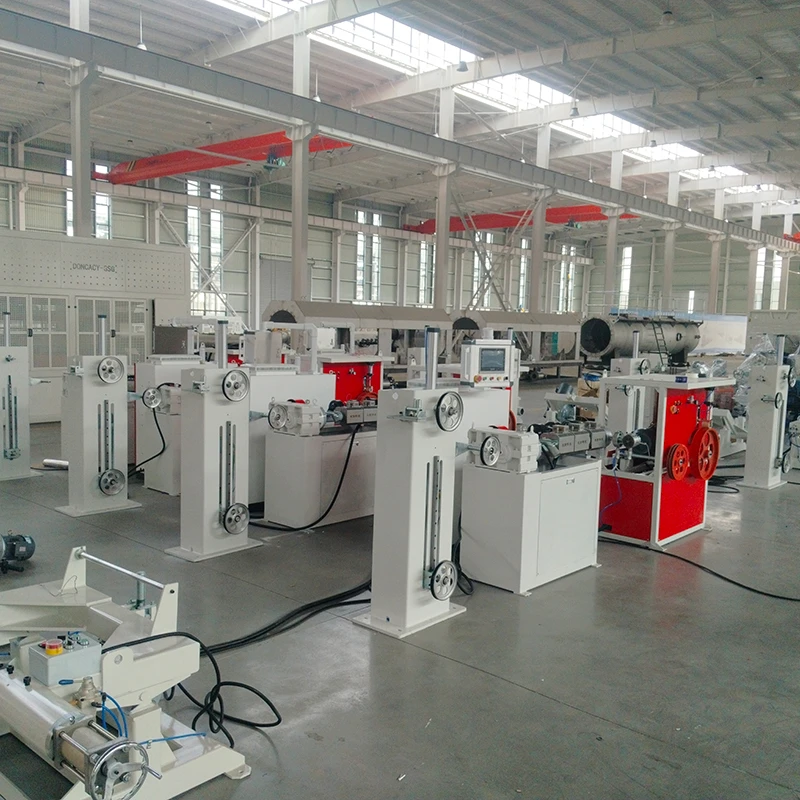
Simply put, a pvc profile production line is a sequence of equipment and automated steps that convert polyvinyl chloride resin combined with additives into continuous shaped profiles. These profiles are molded, cooled, cut, and finished to become window frames, door seals, facade cladding, and more. The production line is the backbone of modern PVC fabrication — melding polymer science with precision engineering to churn out consistent, customizable components that form the skeletons of buildings worldwide.
It also connects to humanitarian efforts. Consider how efficient profile lines can speed up the manufacture of modular shelters or low-cost housing solutions in developing regions — where durability and rapid assembly matter tremendously.
Core Components and Key Factors That Define a Production Line
1. Extrusion Process and Machinery
The extrusion machine is the heart of any pvc profile production line. It melts and forces the compound through shaping dies to form continuous profiles. The precision of the screw design, temperature control, and die geometry directly impacts product uniformity and surface finish.
2. Cooling and Calibration Systems
Once extruded, the hot PVC profile needs rapid cooling and dimensionally perfect calibration. Dedicated water tanks and vacuum calibrators stabilize the profile while maintaining tight tolerances — critical for window installation or industrial sealing.
3. Cutting and Handling Units
Profiles are automatically cut to length after exiting the cooling section. Advanced handling units then stack or transport them for packaging, minimizing manual labor and potential damage.
4. Automation and Control Systems
Modern lines use PLC (Programmable Logic Controllers) to synchronize the entire operation. Automation boosts efficiency, reduces waste, and ensures consistent quality, especially when running high volumes.
5. Additive Feeding and Mixing
To improve UV resistance, color, and flexibility, raw PVC compounds are blended with additives precisely before extrusion. Quality feed systems safeguard product properties and long-term durability.
Summary: What makes a strong pvc profile production line? Precision in extrusion, efficient cooling, seamless cutting, smart automation, and high-quality raw material handling — all integrated into a smooth workflow.
Global Applications and Real-World Use Cases
From the cold boreal forests of Scandinavia to the humid tropical coasts of Southeast Asia, pvc profiles find their place everywhere. Asian countries, leading in construction output, often benefit most from high-speed production lines that manufacture millions of meters of window profiles monthly.
In post-disaster zones, modular homes built with PVC components assembled quickly provide shelter to displaced communities, saving lives and giving dignity back rapidly. Industrial zones in remote areas use pvc profiles for pipeline protection or factory enclosures, where corrosion resistance is crucial.
Institutions focused on sustainability value PVC because profiles can be recycled multiple times without significant degradation, making circular economy principles more tangible in construction.
Advantages and Long-Term Value of PVC Profile Production
- Cost efficiency: Continuous production lines reduce labor and energy costs through automation and optimized material use.
- Durability: PVC profiles withstand weathering, UV rays, and chemicals far better than many wood or metal alternatives.
- Sustainability: Recyclability and reduced construction waste align with global green initiatives.
- Design flexibility: Profiles can be customized in shape, color, and size to suit diverse architectural demands.
- Social impact: Faster production accelerates affordable housing projects, improves living conditions, and supports employment in manufacturing hubs.
In real terms: manufacturers who invest in advanced production lines build trust with customers by delivering consistent, reliable products that last decades — and that kind of reputation is priceless.
Future Trends and Innovations in PVC Profile Production Lines
As renewable energy becomes mainstream, many production lines now integrate solar-powered elements to reduce carbon footprints. Automation continues to evolve with AI-driven sensors to predict maintenance needs before breakdowns occur, cutting downtime dramatically.
On materials, bio-based plasticizers and recycled PVC content are being tested to enhance environmental friendliness. Digital twins — virtual replicas of production lines — allow engineers to simulate process changes before any real-world implementation, saving time and money.
With tightening regulations around emissions and waste (think ISO 14001:2015 standards), manufacturers who adopt these innovations early can secure stronger market positions globally.
Facing Challenges Head-On: Common Issues and Expert Solutions
Of course, no production system is without flaws. PVC profile lines often grapple with:
- Material inconsistency: Variability in PVC resin quality can cause product defects.
- Energy consumption: Despite advances, extrusion remains energy-intensive.
- Maintenance: Wear on screws and dies demands regular replacement, impacting uptime.
Solutions range from strict raw material sourcing policies to incremental upgrades in equipment energy efficiency. Many engineers swear by modular line designs that allow faster part swaps, or by predictive maintenance systems that flag issues before they arise — keeping production flowing smoothly.
Product Specification Table
| Component | Specification | Details |
|---|---|---|
| Extruder Torque | 800-1500 Nm | Depends on profile complexity |
| Output Rate | 150-350 kg/hr | Higher rates for wider profiles |
| Cooling Length | 3-7 meters | Adjustable based on line speed |
| Cutting Precision | ±0.5 mm | Critical for assembly compatibility |
| Automation Level | PLC-based full line control | Customizable to client needs |
Vendor Comparison Table
| Vendor | Line Capacity (kg/hr) | Automation Level | Energy Efficiency | Price Range (USD) |
|---|---|---|---|---|
| TechPlast Co. | 200-300 | High (Full PLC integration) | Moderate (Standard motors) | $280,000 - $350,000 |
| EcoLine Systems | 150-250 | Medium (Semi-automated) | High (Energy-saving features) | $230,000 - $300,000 |
| MasterPVC | 350+ (Heavy-duty) | Very High (AI & IoT integration) | Moderate | $400,000 - $500,000 |
Frequently Asked Questions About PVC Profile Production Lines
Q1: How does a pvc profile production line improve construction efficiency?
A: By automating extrusion, cooling, cutting, and handling, these lines produce consistent, ready-to-install profiles rapidly, reducing lead times and labor costs on site. This streamlining leads to faster project completion and better material waste management.
Q2: What’s the typical lifespan of profiles made by these production lines?
A: Properly manufactured PVC profiles can last 30 to 50 years, depending on installation and environmental exposure. They resist rot, corrosion, and UV damage better than many alternatives, making them ideal for long-term use.
Q3: Can the production lines be customized for different profile shapes and sizes?
A: Absolutely. The key is in the extrusion dies and line settings. Modern lines offer adjustable tooling and modular components to accommodate varied designs, meeting client-specific architectural requirements.
Q4: Are pvc profiles produced with these lines environmentally sustainable?
A: Yes, PVC itself can be recycled multiple times. Many lines now integrate recycled content and energy-efficient systems. However, responsible sourcing and proper end-of-life recycling practices remain essential for true sustainability.
Q5: How do manufacturers ensure quality control during production?
A: Through real-time monitoring by PLC systems, precise temperature and pressure controls, and post-production inspections. QC processes often include dimensional checks, surface finish assessments, and mechanical property testing.
Conclusion: Embracing the Future of PVC Profile Manufacturing
The impact of pvc profile production line technology extends far beyond factory floors. It’s about building safer, greener, and more affordable living spaces worldwide. As innovation marches on — pushing automation, sustainable materials, and smart manufacturing — businesses that adopt these advancements will lead markets and uplift communities simultaneously.
Ready to explore these solutions more deeply? Visit our website: https://www.ahdc11.com and join the growing network shaping tomorrow’s PVC profile landscape.
References
- UN Environment Programme: Buildings and Climate Change
- ISO 14001 Environmental Management Standards
- Wikipedia: Polyvinyl Chloride
-
High Efficiency PE Extrusion Line Guide for Plastic ManufacturingNewsApr.16,2026
-
Guide to Choosing High Efficiency ppr pipe extrusion machineNewsApr.09,2026
-
Comprehensive Guide to Modern Pipe Production Line Technologies and OptimizationNewsApr.07,2026
-
Choosing the Right Extrusion Pipe Machine for Optimal Plastic Pipe ProductionNewsApr.04,2026
-
Comprehensive Guide to PPR Pipe Extrusion Line Technology and ApplicationsNewsMar.31,2026
-
Understanding the Functionality and Applications of a Pipe Extruder SystemNewsMar.28,2026
-
Comprehensive Guide to Pipe Extrusion Machine Technology and ApplicationsNewsMar.26,2026


