
Understanding the Value Proposition of an hdpe machine price
In the rapidly evolving industrial landscape, the investment in advanced pipe production technology is a strategic decision that directly impacts operational efficiency, product quality, and long-term profitability. Evaluating the hdpe machine price involves much more than just the initial capital outlay; it encompasses the total cost of ownership, including energy consumption, maintenance, labor, and the quality of the output product. This article delves into the critical aspects of modern composite pipe production lines, specifically focusing on the Brand-new High Speed Multi Layer Steel Wire Mesh Skeleton Reinforced Polyethylene Composite Pipe Production Line, providing insights into its technical prowess, market relevance, and the profound value it delivers.
High-density polyethylene (HDPE) pipes, especially those reinforced with steel wire mesh, represent a significant advancement over traditional materials. They offer superior performance characteristics essential for demanding applications across various industries. The sophisticated machinery required for their production, therefore, commands a justifiable investment that reflects its advanced engineering and capacity for high-volume, high-quality output.
Industry Trends in Composite Pipe Production
The global demand for high-performance piping solutions is experiencing robust growth, driven by infrastructure development, urbanization, and the need for sustainable and reliable fluid transport systems. Key trends influencing the hdpe machine price and market for composite pipe production lines include:
- Increased Demand for Durability and Longevity: Industries are moving away from materials prone to corrosion and degradation, favoring composite pipes with extended service lives, often exceeding 50 years.
- Focus on Environmental Sustainability: HDPE is recyclable, and the production process, when optimized, can be energy-efficient, aligning with global environmental objectives.
- Advanced Material Science: Integration of reinforcing materials like steel wire mesh significantly enhances the pressure resistance and mechanical strength of HDPE pipes, expanding their application range.
- Automation and Smart Manufacturing: Modern production lines incorporate advanced control systems (e.g., PLC, SCADA) for precise process management, reduced labor, and consistent quality, influencing the overall hdpe machine price.
- Customization and Specialization: The market increasingly requires pipes tailored to specific applications, necessitating flexible production lines capable of manufacturing various diameters, pressure ratings, and layer configurations.
These trends underscore the importance of investing in sophisticated machinery that can meet current and future market demands, making the decision regarding hdpe machine price a critical long-term investment analysis.
Detailed Process Flow of Composite Pipe Production
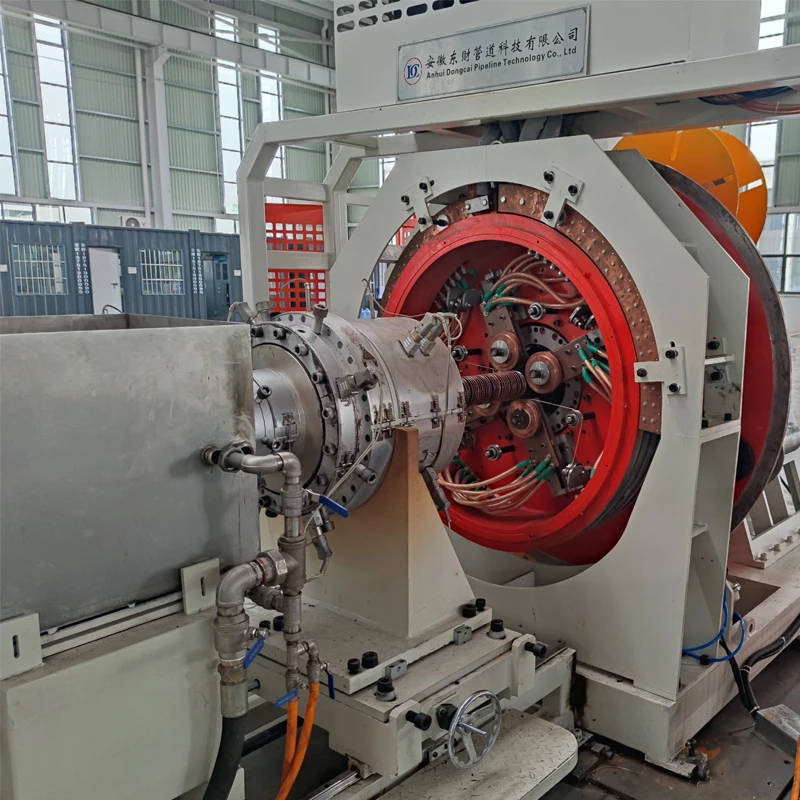
The Brand-new High Speed Multi Layer Steel Wire Mesh Skeleton Reinforced Polyethylene Composite Pipe Production Line employs a highly optimized and automated process to create robust composite pipes. Understanding this process is key to appreciating the engineering behind the hdpe machine price.
Schematic Process Steps:
-
1. Material Preparation
HDPE granules are pre-heated and conveyed to the primary extruder. Steel wire coils are set up on decoilers.
-
2. Inner Layer Extrusion
The first HDPE layer is extruded to form the inner pipe, maintaining precise wall thickness and roundness.
-
3. Steel Wire Winding & Welding
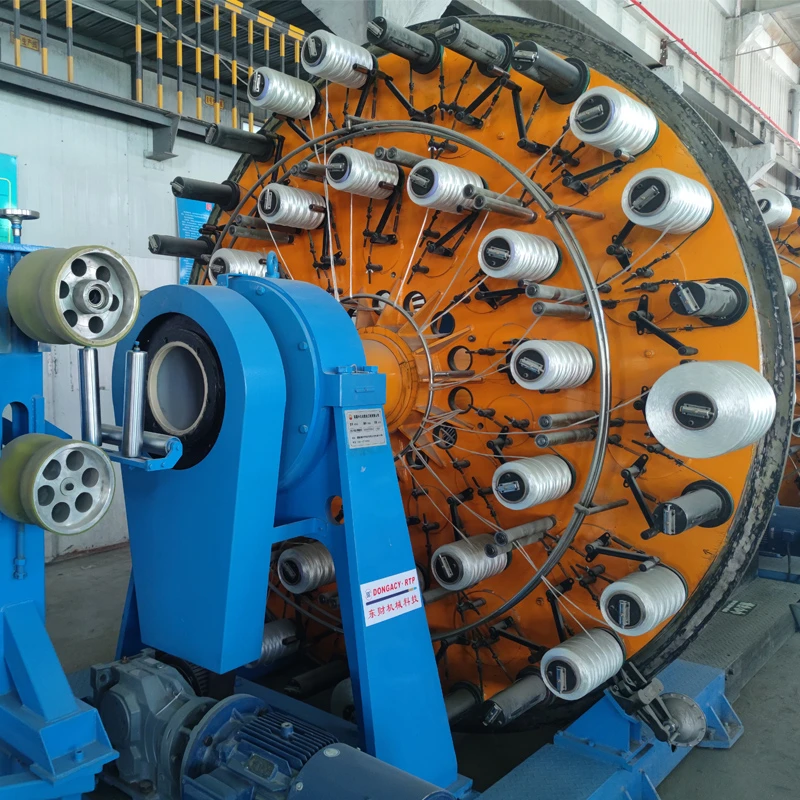
The steel wires are precisely wound around the inner HDPE layer, forming a mesh skeleton. Automated welding ensures a strong, continuous bond.
-
4. Outer Layer Extrusion
A second HDPE layer is then extruded over the steel mesh, embedding it completely and forming a robust composite structure.
-
5. Cooling & Sizing
The hot pipe enters a vacuum calibration tank for precise sizing and then passes through cooling tanks to solidify the HDPE layers.
-
6. Hauling & Cutting
A precise haul-off unit pulls the pipe, followed by an automatic cutting saw that cuts the pipe to predefined lengths.
-
7. Stacking/Coiling
Finished pipes are either stacked on cradles or coiled (for smaller diameters) for storage and transport.
Product Materials & Manufacturing Processes:
The primary material for the pipe is high-density polyethylene (HDPE), known for its excellent chemical resistance, flexibility, and non-corrosive properties. The reinforcing material is high-strength carbon steel wire, ensuring robust mechanical performance. Key manufacturing processes involve precision extrusion for consistent HDPE layering, advanced automated winding and electric resistance welding techniques for the steel mesh skeleton, and vacuum calibration for exact pipe dimensions. Components of the machine itself, such as extruders, gearboxes, and dies, typically involve high-precision CNC machining and forging for durability and performance.
Testing Standards & Service Life:
Pipes produced on this line adhere to stringent international standards such as ISO 4427 for PE pipes, ASTM F714 for large-diameter PE pipes, and industry-specific standards for steel wire mesh reinforced composite pipes (e.g., CJ/T 189, SY/T 0579). These standards cover material properties, dimensional tolerances, hydrostatic pressure resistance, and environmental stress cracking resistance. The typical service life for these composite pipes, under normal operating conditions, is expected to exceed 50 years, significantly reducing replacement cycles and long-term costs.
Target Industries & Advantages:
This production line caters to a diverse range of industries:
- Petrochemical Industry: For transporting corrosive chemicals, oil, and gas, benefiting from HDPE's chemical inertness and the pipe's high pressure rating.
- Metallurgy & Mining: Slurry transport, mine ventilation, and water supply where abrasion resistance and high mechanical strength are crucial.
- Water Supply & Drainage: Municipal and industrial water pipelines, sewage systems, and irrigation networks, leveraging excellent corrosion resistance and long service life.
- Power & Telecommunications: Cable protection conduits, offering superior protection against external forces.
Advantages in typical application scenarios include:
- Energy Saving: Smooth inner surface reduces friction loss, leading to lower pumping energy requirements.
- Corrosion Resistance: HDPE is highly resistant to chemical attack, electrolysis, and microbial growth, eliminating the need for cathodic protection.
- High Pressure Rating: Steel wire reinforcement allows for significantly higher operating pressures compared to solid HDPE pipes.
- Impact Resistance: Excellent resistance to external impacts and seismic activity.
- Easy Installation: Lighter than metal pipes, with flexible joining options, reducing installation time and costs.
Technical Specifications and Parameters
The Brand-new High Speed Multi Layer Steel Wire Mesh Skeleton Reinforced Polyethylene Composite Pipe Production Line is engineered for precision and high output. Here's a table outlining typical specifications that influence the overall hdpe machine price and operational efficiency:
| Parameter | Specification | Description/Notes |
|---|---|---|
| Pipe Diameter Range | DN50 - DN630 mm (2 - 24 inches) | Standard range, customizable for specific projects. |
| Production Speed | Up to 15 m/min | Variable speed drive for optimal throughput based on diameter. |
| Extruder Type (HDPE) | High-efficiency Single Screw Extruders | Precise temperature control, optimized screw design for HDPE. |
| Installed Power | Approx. 250-400 kW | Actual power consumption varies with pipe size and speed. |
| Control System | Siemens PLC with HMI Touch Screen | Intuitive operation, real-time monitoring, data logging. |
| Steel Wire Diameter | 0.8 - 3.0 mm | Selected based on required pressure rating and pipe diameter. |
| Layer Structure | HDPE Inner Layer + Steel Mesh + HDPE Outer Layer | Fully bonded structure for optimal performance. |
| Cooling Method | Multi-stage Vacuum Calibration & Spray Cooling | Ensures uniform cooling and precise dimensional stability. |
These specifications highlight the advanced engineering and robust construction of the machinery. The high-speed capabilities and precise control systems contribute to lower unit production costs and consistent product quality, factors that are crucial when evaluating the return on investment for the hdpe machine price.
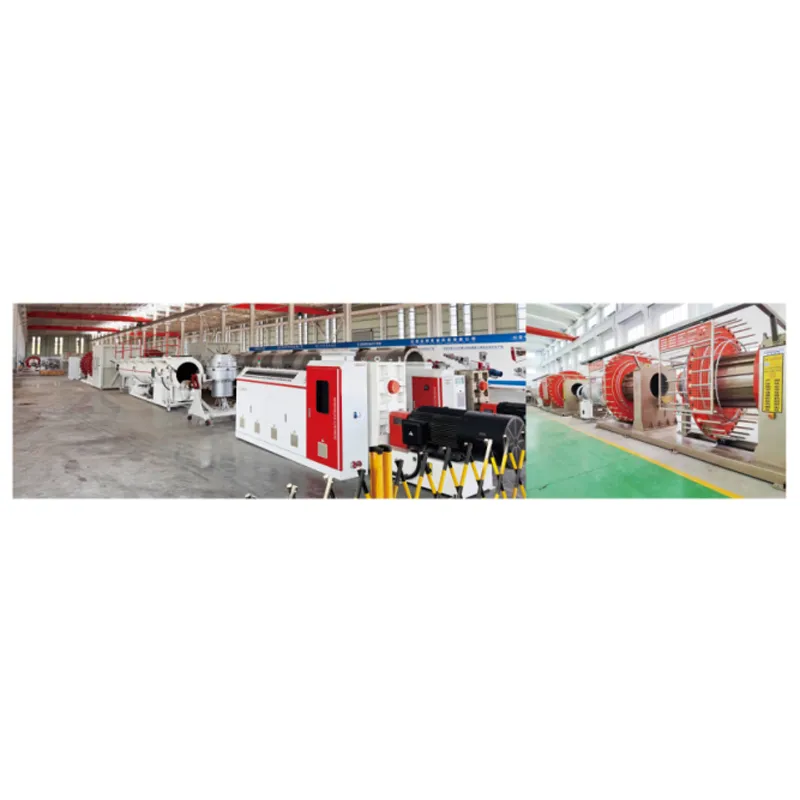
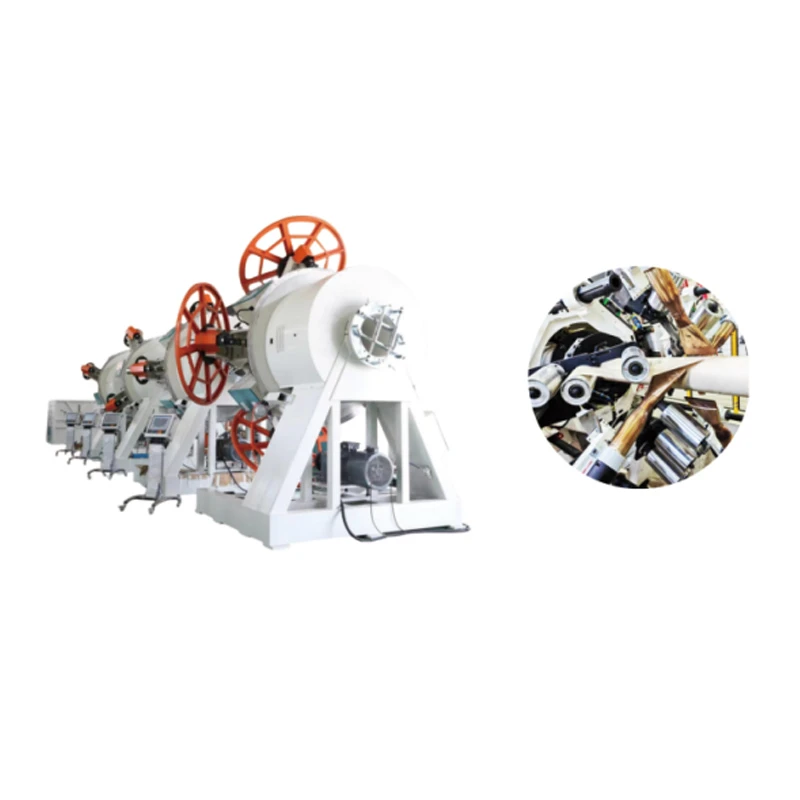
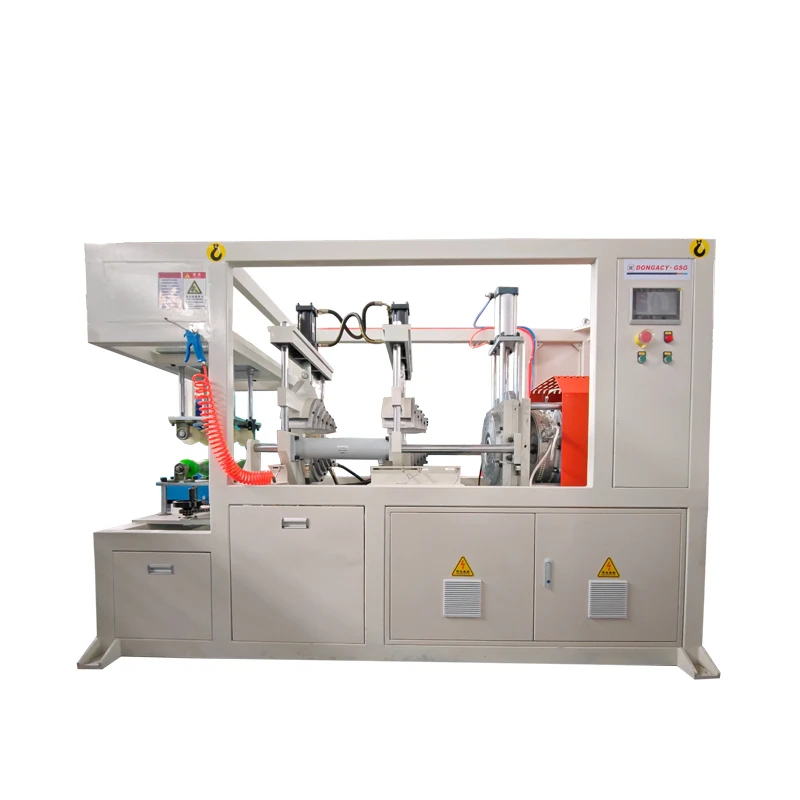
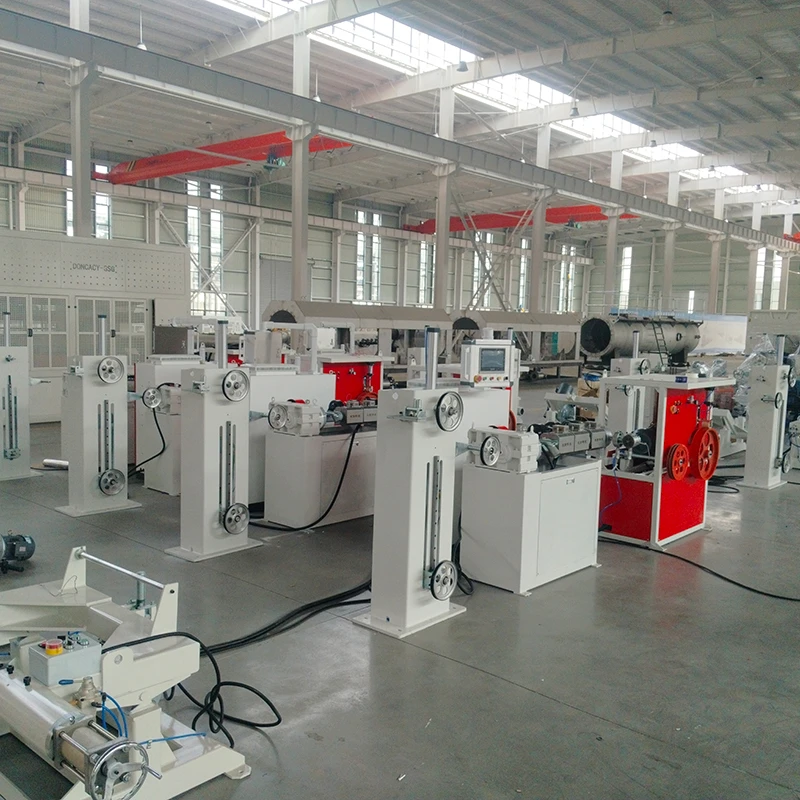
Visual representation of a composite pipe production line component.
Technical Advantages of Steel Wire Mesh Reinforced HDPE Pipes
The synergistic combination of HDPE and steel wire mesh results in a pipe with exceptional technical advantages:
- Superior Pressure Resistance: The steel wire mesh skeleton significantly boosts the pipe's resistance to internal pressure, allowing for applications in high-pressure fluid transport where conventional HDPE pipes might fail.
- Excellent Corrosion and Chemical Resistance: The HDPE layers encapsulate the steel, providing complete protection against corrosive media, aggressive soils, and electrolytic degradation, ensuring a long, maintenance-free life.
- Enhanced Impact Strength and Toughness: The composite structure offers superior resistance to external impacts, punctures, and mechanical stress, making it suitable for demanding installation environments and operations.
- Low Thermal Expansion: Compared to solid HDPE, the steel reinforcement reduces the coefficient of thermal expansion, minimizing pipe movement and stress in systems exposed to temperature fluctuations.
- High Flow Capacity: The smooth inner surface of HDPE ensures minimal friction, maintaining high flow rates and reducing pumping energy costs over the pipe's lifetime.
- Long Service Life: Designed for a service life exceeding 50 years, these pipes offer an exceptional return on investment by minimizing replacement and repair costs.
- Lightweight for Easier Handling: Despite their strength, these composite pipes are considerably lighter than steel or concrete pipes of comparable strength, facilitating easier transport and installation.
These inherent advantages directly translate into lower operational expenditures and enhanced system reliability for end-users, underscoring the value derived from the initial hdpe machine price.
Application Scenarios and Target Industries
The versatility and robust performance of steel wire mesh reinforced HDPE composite pipes make them ideal for a wide array of applications across critical infrastructure sectors:
- Municipal Water Supply and Distribution: Replacing aging metallic pipes prone to corrosion and leakage, ensuring clean and reliable drinking water delivery.
- Industrial Wastewater and Drainage Systems: Handling aggressive industrial effluents and large volumes of storm water efficiently.
- Oil & Gas Pipelines: Transportation of crude oil, refined products, and natural gas, especially in corrosive environments or where flexibility is needed for uneven terrain.
- Mining Operations: Slurry pipelines, tailing disposal, and freshwater supply in harsh, abrasive mining conditions.
- Chemical Processing Plants: Conveying various chemicals due to HDPE's excellent chemical inertness.
- Agricultural Irrigation: Large-scale irrigation projects requiring durable and leak-proof piping systems.
- Seawater Intake and Outfall: Resistance to saltwater corrosion and marine biofouling.
These pipes offer a reliable solution for critical infrastructure, reducing maintenance costs and ensuring operational continuity. Our production lines are designed to meet the rigorous demands of these diverse applications, providing manufacturers with the capacity to serve high-value markets.
Customized Solutions and Engineering Expertise
Recognizing that no two projects are identical, we offer highly customized solutions for our composite pipe production lines. Our engineering team collaborates closely with clients to understand their specific requirements, whether it involves producing pipes of unique diameters, specialized pressure ratings, or integrating with existing factory automation systems. The goal is to optimize the hdpe machine price by providing a solution perfectly tailored to maximize ROI.
Our expertise extends to:
- Die Head Design: Custom-engineered multi-layer die heads for precise control over HDPE layer thickness and optimal bonding with the steel mesh.
- Extruder Configuration: Tailoring extruder capacity and screw design for specific material formulations and throughput requirements.
- Automation Level: From semi-automated systems to fully integrated, intelligent production lines with remote monitoring capabilities.
- Auxiliary Equipment: Integration of specialized feeders, mixing units, chillers, and cutting/coiling systems to match unique operational needs.
This commitment to customization ensures that each investment in a hdpe machine price is precisely aligned with the client's strategic objectives and operational context.
Vendor Comparison and Investment Considerations
When evaluating the hdpe machine price, a thorough vendor comparison is essential. It's not merely about the lowest initial cost, but rather the total value proposition, including technology, reliability, after-sales support, and the vendor's track record. Below is a comparative overview of factors to consider:
| Feature/Criterion | Premium Vendor (e.g., Ahdc) | Standard Vendor | Budget Vendor |
|---|---|---|---|
| Technology & Innovation | Latest, high-speed, multi-layer, advanced automation, patented designs. | Proven, reliable, moderate automation, standard designs. | Basic, manual adjustments, older technology. |
| Component Quality | Top-tier global brands (Siemens, ABB, SKF). | Reputable domestic or regional brands. | Lower-cost, unbranded components. |
| After-Sales Service | Comprehensive, global network, remote diagnostics, quick response. | Regional support, slower response, limited spare parts. | Minimal, often third-party or no support. |
| Customization Capability | Extensive, engineering collaboration, tailored solutions. | Limited options, primarily standard configurations. | Off-the-shelf, no customization. |
| System Integration | Seamless integration with MES/ERP, smart factory readiness. | Basic data export, some connectivity. | Standalone operation. |
| Overall Value (ROI) | High long-term ROI, low TCO, superior product quality. | Moderate ROI, average TCO. | Potentially low ROI due to high failure rates, maintenance. |
Investment in a premium production line, while having a higher initial hdpe machine price, often results in significantly lower operational costs, higher output quality, extended machine lifespan, and reduced downtime, leading to a superior return on investment over time.
Real-World Application Case Studies
Our production lines have been successfully deployed globally, demonstrating tangible benefits for our clients. Here are illustrative case studies:
-
Case Study 1: Municipal Water Infrastructure Upgrade
A major municipal water authority in Southeast Asia invested in our High Speed Multi Layer Steel Wire Mesh Skeleton Reinforced Polyethylene Composite Pipe Production Line to upgrade its aging cast iron and concrete pipeline network. The authority needed pipes capable of handling fluctuating pressures and resisting the region's aggressive soil conditions. Our client, a local pipe manufacturer, utilized the line to produce DN400 composite pipes with PN16 pressure ratings.
Outcome: The project delivered a 40% reduction in pipe installation time due to the lighter weight and longer pipe sections. Leakage rates in the new sections dropped by 95% compared to the old network, and the pipes showed no signs of corrosion after 5 years, ensuring reliable water supply for millions of residents. The efficiency of the production line kept the per-meter pipe cost competitive, justifying the initial hdpe machine price.
-
Case Study 2: Industrial Wastewater Transport in a Chemical Plant
A leading chemical manufacturer in Europe required a robust solution for transporting corrosive industrial wastewater within its facility. Traditional steel pipes required frequent maintenance and cathodic protection. Our client, a specialized pipe supplier, commissioned our production line to produce DN250 composite pipes for this demanding application.
Outcome: The composite pipes offered complete immunity to chemical attack, eliminating the need for internal coatings and reducing maintenance downtime by 80%. The higher pressure rating also allowed for optimized pumping schedules, leading to a 15% energy saving. This project showcased the superior chemical resistance and durability, proving the long-term value of the investment in the production technology.
Ensuring Quality: Certifications and Standards
Our commitment to quality is unwavering, ensuring that our production lines, and the pipes they produce, meet the highest international standards. This commitment is reflected in our adherence to:
- ISO 9001:2015 Certification: Demonstrates our robust Quality Management System in design, development, production, installation, and service.
- CE Mark Compliance: Our machinery meets European safety, health, and environmental protection requirements.
- Compliance with Global Pipe Standards: Pipes produced conform to critical standards such as ISO 4427 (PE pipes), ASTM F714 (Large Diameter PE Pipes), DIN 8074/8075, and national standards like CJ/T 189 and SY/T 0579 for steel wire mesh reinforced composite pipes.
- Component Certifications: We utilize components from internationally recognized suppliers (e.g., Siemens, ABB, Schneider) that come with their own quality and safety certifications.
These certifications provide our clients with the assurance of reliability, performance, and adherence to global best practices, safeguarding their investment in the hdpe machine price.
Frequently Asked Questions (FAQ)
Q1: What is the typical lead time for a new High Speed Multi Layer Steel Wire Mesh Skeleton Reinforced Polyethylene Composite Pipe Production Line?
A1: The lead time typically ranges from 90 to 150 days, depending on the level of customization and specific component availability. This includes design, manufacturing, assembly, factory acceptance testing (FAT), and preparation for shipment. Detailed schedules are provided upon order confirmation.
Q2: What kind of warranty is offered with the hdpe machine price?
A2: We offer a standard 12-month warranty from the date of final acceptance or 18 months from shipment, whichever comes first. This covers manufacturing defects and component failures under normal operating conditions. Extended warranty options are available upon request.
Q3: What after-sales support and technical assistance are available?
A3: Our comprehensive after-sales support includes installation supervision, commissioning, operator training, and ongoing technical support. We provide spare parts supply, remote diagnostics, and on-site assistance by experienced engineers. A dedicated support team is available to ensure smooth operation and quick resolution of any issues.
Q4: Can this production line produce pipes for potable water applications?
A4: Yes, when using virgin, food-grade HDPE materials compliant with standards like NSF/ANSI 61, pipes produced on this line are suitable for potable water applications. The smooth inner surface prevents biofilm growth, and HDPE's non-toxic nature ensures water quality.
Q5: What are the energy consumption considerations for this high-speed line?
A5: While it is a high-speed line, it incorporates energy-efficient extruders with optimized heating zones and highly efficient motors (IE3/IE4 standards). The exact consumption depends on pipe diameter and production speed, but the design aims to minimize energy usage per unit length of pipe, contributing to a favorable total cost of ownership beyond the initial hdpe machine price.
Conclusion: The Strategic Investment in Advanced HDPE Pipe Production
The investment in a High Speed Multi Layer Steel Wire Mesh Skeleton Reinforced Polyethylene Composite Pipe Production Line is a strategic decision for manufacturers aiming to capitalize on the growing demand for durable, high-performance piping solutions. The initial hdpe machine price is offset by unparalleled operational efficiencies, superior product quality, and the ability to serve diverse, high-value industrial sectors. By integrating advanced technology, adhering to stringent quality standards, and offering comprehensive support, such a production line represents not just a purchase, but a partnership in long-term success and market leadership. The shift towards composite pipes is irreversible, and being at the forefront of this technological curve is crucial for sustained growth in today's competitive global market.
References
- International Organization for Standardization (ISO). ISO 4427:2007 - Plastics piping systems for water supply, and for drainage and sewerage under pressure - Polyethylene (PE).
- American Society for Testing and Materials (ASTM). ASTM F714 - Standard Specification for Polyethylene (PE) Plastic Pipe (DR-PR) Based on Outside Diameter.
- Plastics Pipe Institute (PPI). Handbook of Polyethylene Pipe.
- China Association for Engineering Construction Standardization (CECS). CJ/T 189-2007 - Steel Wire Mesh Reinforced Polyethylene (PE) Composite Pipe.
- Journal of Pipeline Science and Engineering. "Performance Analysis of Steel Wire Mesh Reinforced HDPE Composite Pipes in High-Pressure Applications." Vol. 15, Issue 2 (2022).
-
High Efficiency PE Extrusion Line Guide for Plastic ManufacturingNewsApr.16,2026
-
High Speed Steel Wire Mesh HDPE Composite Pipe Production Line - Anhui Dongchai|High Automation&Energy EfficiencyNewsApr.13,2026
-
High Speed Steel Wire Mesh HDPE Composite Pipe Production Line - Anhui Dongchai|High Automation&Energy EfficiencyNewsApr.13,2026
-
Guide to Choosing High Efficiency ppr pipe extrusion machineNewsApr.09,2026
-
Comprehensive Guide to Modern Pipe Production Line Technologies and OptimizationNewsApr.07,2026
-
Choosing the Right Extrusion Pipe Machine for Optimal Plastic Pipe ProductionNewsApr.04,2026
-
Comprehensive Guide to PPR Pipe Extrusion Line Technology and ApplicationsNewsMar.31,2026


