
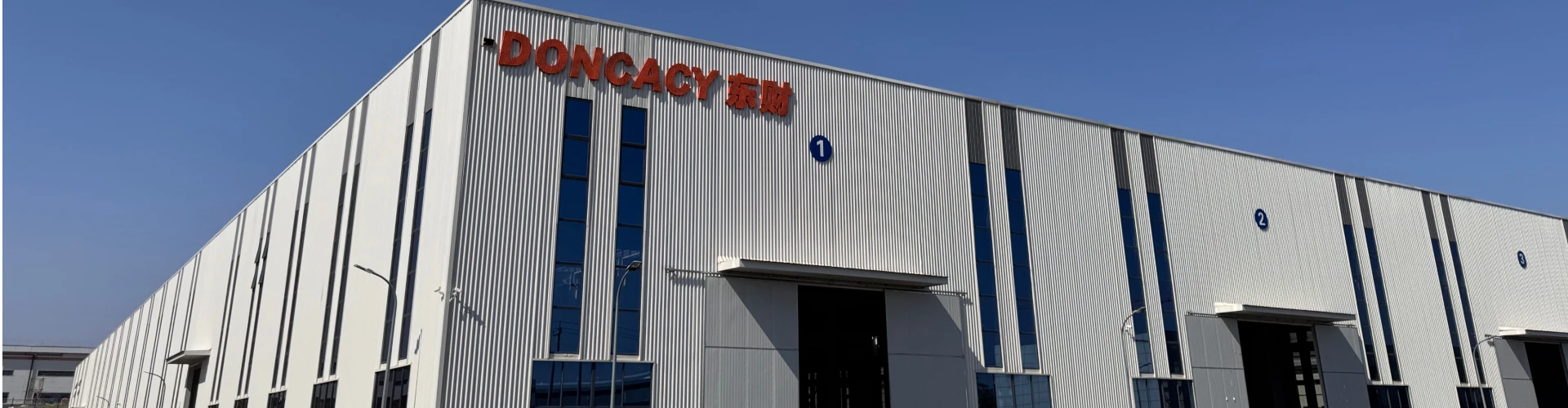
PVC Pipe Extrusion, From Factory Floor to Field Use
If you’ve walked through a pipe plant lately, you’ve probably noticed the same thing I have: automation is no longer a “nice to have.” It’s the backbone. That’s why a pvc pipe extrusion line that combines PLC brains with sturdy mechanics is getting short-listed by buyers who used to swear by manual tweaks. Honestly, I get it—repeatability pays the bills.
The Pvc Pipe Extrusion Production Line from Anhui (Origin: No. 26 Huzhou Road, Nanqiao District, Chuzhou City, Anhui Province) has been turning heads in drainage, sewage, and telecom conduit. Many customers say it’s the blend of energy savings and stable output that convinced them. And yes, the service team actually picks up the phone—surprisingly rare these days.
Industry snapshot: efficiency, electrics, and tighter QA
Three currents define the market now: lower kWh/kg, electrical/telecom growth, and higher QA under ISO/ASTM. In fact, municipal drainage projects want traceability baked into the HMI; fiber conduit buyers press for UL and crush tests data; and everyone is comparing OEE on WhatsApp groups. The pvc pipe extrusion line that wins tends to show stable vacuum calibration, cleaner belling, and honest energy numbers.
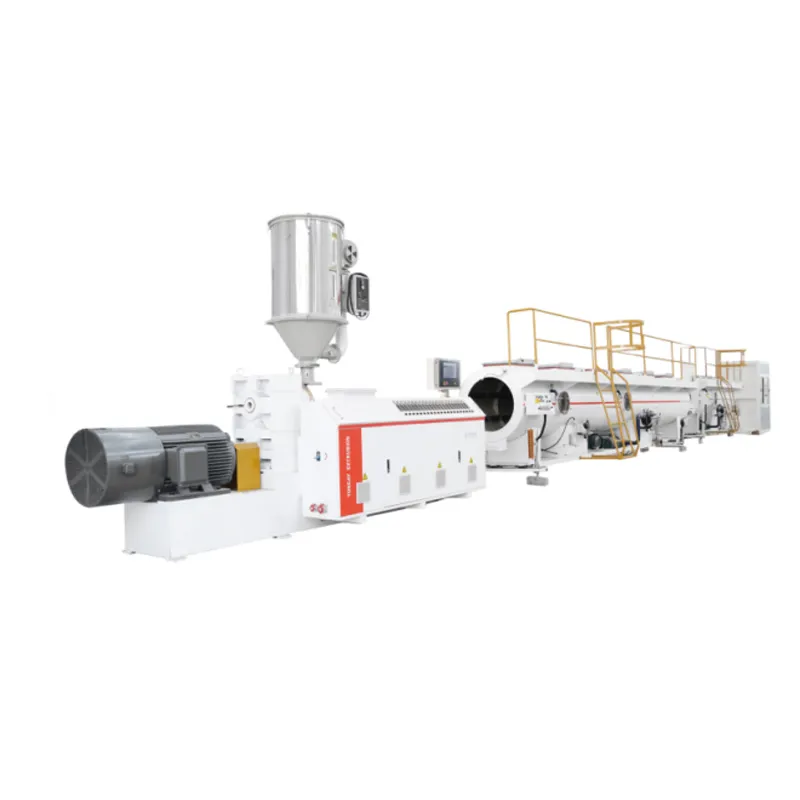
Process flow (real-world view)
Materials: PVC resin (K≈65–67), Ca-Zn stabilizers (lead-free options), internal/external lubricants, TiO2 for whitening, CaCO3 filler (often ≤15%), and impact modifiers (ACR/CPE) depending on toughness spec.
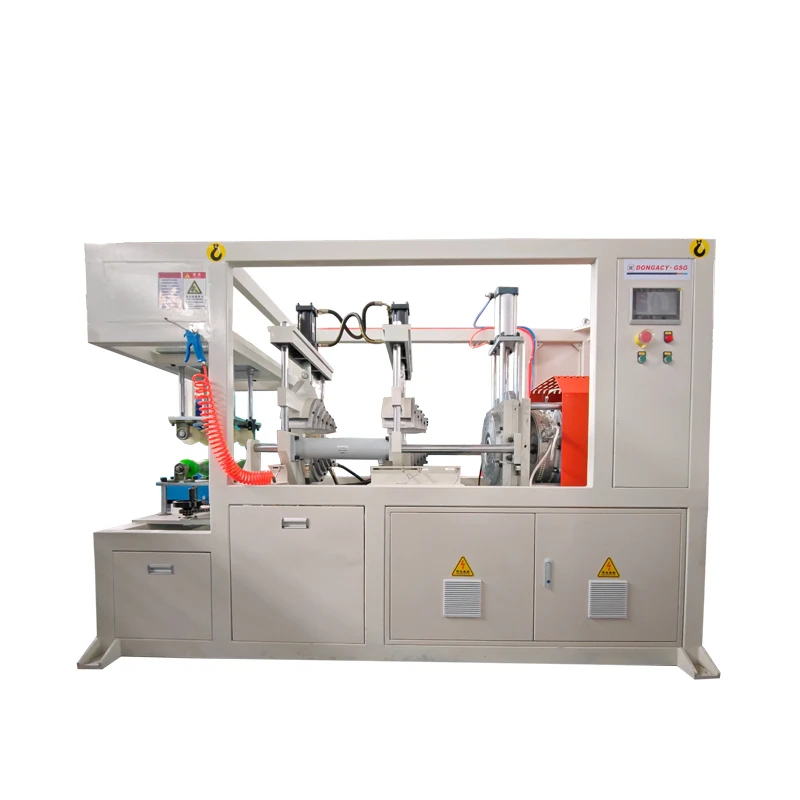
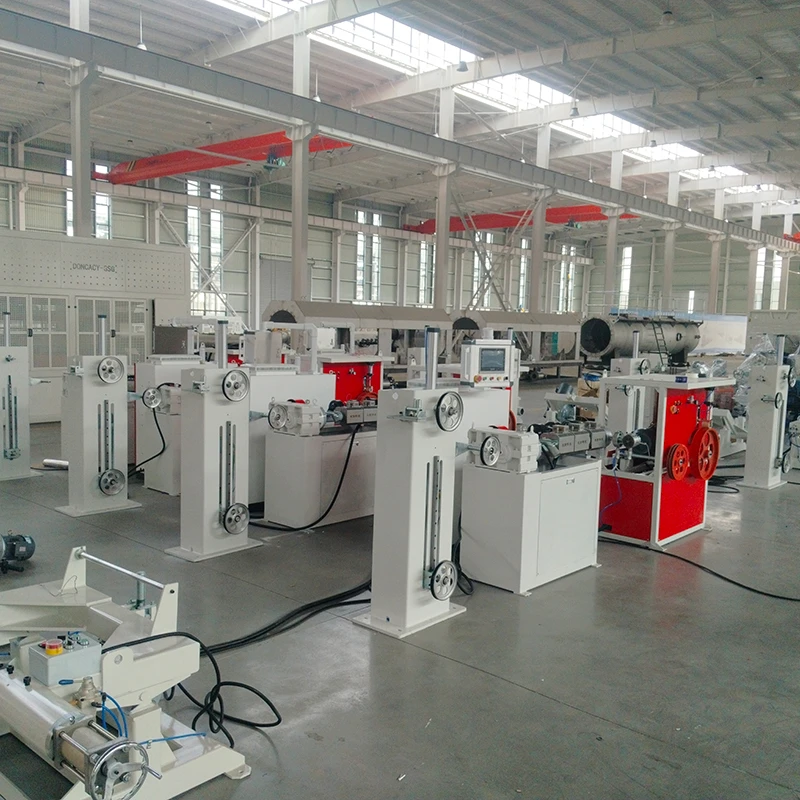
Method: conical twin-screw extrusion → die + sizing sleeve → vacuum calibration tank → spray cooling → haul-off → planetary/no-dust cutter → belling (R/Socket) → printing/marking → stacking.
Testing & standards: hydrostatic pressure (ISO 1167), impact (ISO 3127), Vicat softening (ISO 306), dimensional checks (ISO 3126), marking (ISO 4422/ASTM D1785 for pressure grades), and for conduit, UL 651 cues. Service life: around 50 years when installed per ISO 4422 guidance—real-world use may vary with soil, UV, and temperature.
Product specs at a glance
| Parameter | Typical value | Notes |
|---|---|---|
| Pipe diameter range | 16–630 mm | Different die sets |
| Extruder | Conical twin-screw (SJSZ) | Stable plastification |
| Output | ≈180–800 kg/h | Resin & formula dependent |
| Energy use | ≈0.35–0.50 kWh/kg | Shop-floor average |
| Control | PLC auto (Siemens/Delta) | Remote diagnostics |
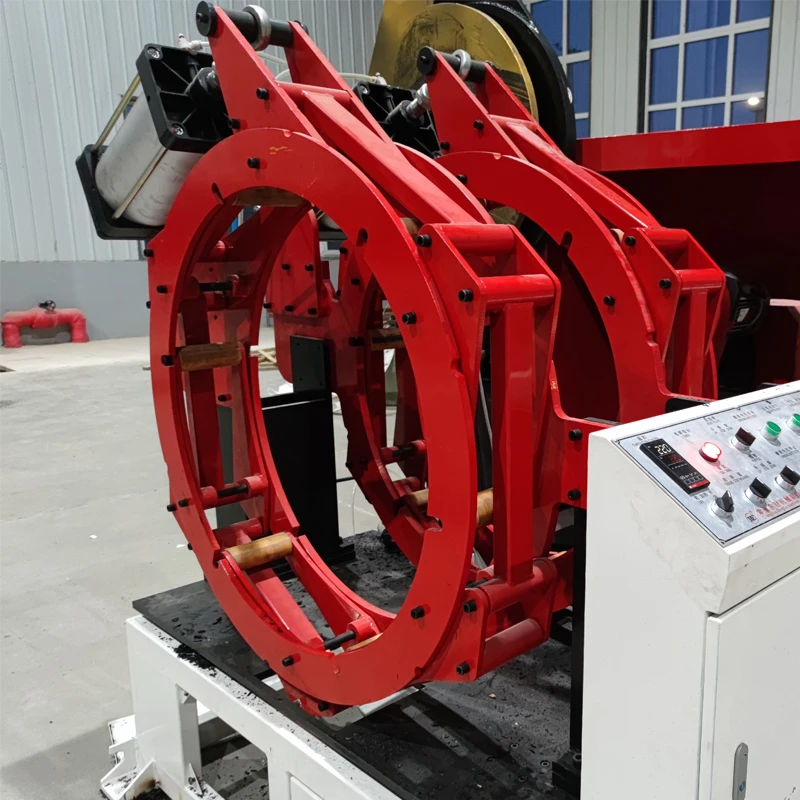
| Cutter/Belling | Planetary + R/Socket | Low dust finish |
Where it’s used (and why)
- Municipal drainage/sewage (smooth inner wall, low fouling).
- Electrical & telecom conduit (pulling-friendly, UL-style checks).
- Building drainage/rainwater routing; agricultural irrigation mains.
Advantages: lower kWh/kg via synchronized drives, fewer ovality issues thanks to long vacuum tank, and tidy sockets that actually pass go/no-go gauges. The pvc pipe extrusion line also logs batches for audits—handy when a consultant shows up unannounced.
Vendor comparison (shortlist view)
| Vendor | Control | Output | Certs | Services | Lead time |
|---|---|---|---|---|---|
| Anhui Decheng (ahdc11.com) | PLC, remote support | ≈180–800 kg/h | ISO 9001, CE | On-site commissioning | ≈6–10 weeks |
| EU Brand A | PLC + MES | ≈200–900 kg/h | CE, ISO 50001 | Global service | ≈10–16 weeks |
| Local Vendor B | Basic PLC | ≈120–500 kg/h | Factory QA | Limited | ≈4–8 weeks |
Customization, compliance, and feedback
Options include anti-wear barrel liners for filler-heavy recipes, servo haul-offs for thin-wall telecom, and socket automation. Compliance: ISO 9001 factory system, CE machinery safety; pipe performance aligned with ISO 4422/ASTM D1785 and for conduit projects, UL 651 style testing by third parties. A customer in the Gulf told me, “setup was smoother than we expected; scrap dipped below 1.5% in week two.” That tracks with our notes.
Case notes (quick)
Municipal drainage retrofit, SE Asia: two lines replaced legacy extruders. Energy fell ≈18% (to ≈0.39 kWh/kg), OEE rose to 86%, line speed stabilized at 0.8–8 m/min across 110–315 mm. Telecom project, OEM conduit: 60 km produced in 5 weeks; zero field rejections after ISO 1167 lot testing. The pvc pipe extrusion line held ovality ≤1.5% on 160 mm sockets—auditor was happy, to be honest.
Bottom line: if you’re chasing dependable sockets, tight ovality, and sensible power bills, this line deserves a demo run. Just bring your own formulation so the numbers are real.
Authoritative references
- ASTM D1785 — Standard Specification for PVC Plastic Pipe, Schedules 40, 80, and 120
- ISO 4422 — Pipes and fittings made of unplasticized PVC (uPVC) for water supply
- UL 651 (via IEC catalog reference) — Rigid PVC conduit, fittings, and elbows
- ISO 1167 — Thermoplastics pipes for pressure applications — Hydrostatic testing
- ISO 3127 — Thermoplastics pipes — Determination of resistance to external blows
-
High Efficiency PE Extrusion Line Guide for Plastic ManufacturingNewsApr.16,2026
-
Guide to Choosing High Efficiency ppr pipe extrusion machineNewsApr.09,2026
-
Comprehensive Guide to Modern Pipe Production Line Technologies and OptimizationNewsApr.07,2026
-
Choosing the Right Extrusion Pipe Machine for Optimal Plastic Pipe ProductionNewsApr.04,2026
-
Comprehensive Guide to PPR Pipe Extrusion Line Technology and ApplicationsNewsMar.31,2026
-
Understanding the Functionality and Applications of a Pipe Extruder SystemNewsMar.28,2026
-
Comprehensive Guide to Pipe Extrusion Machine Technology and ApplicationsNewsMar.26,2026


