
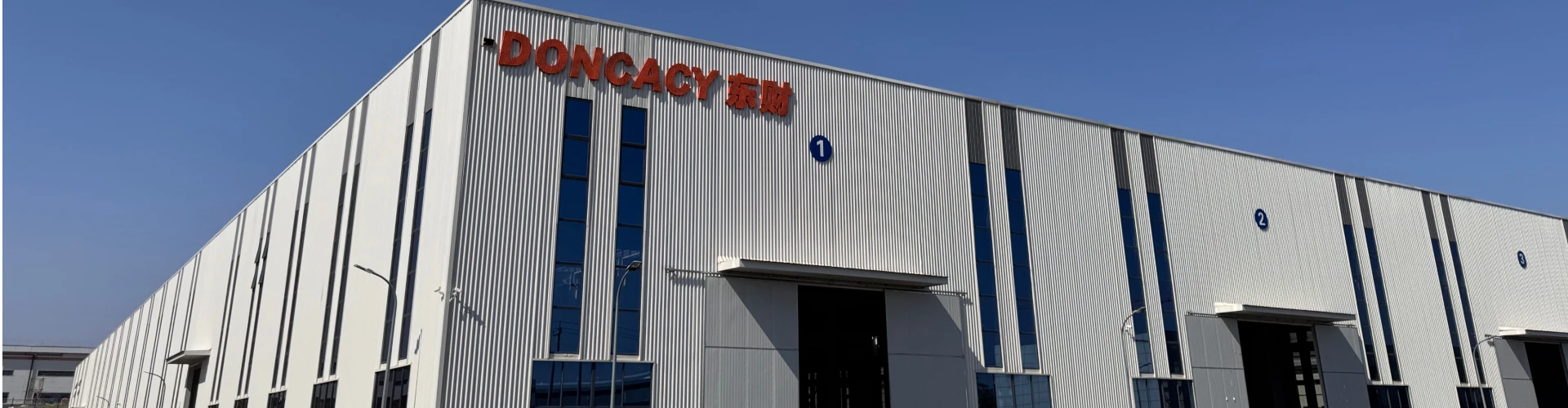
Introduction to Polyethylene Pipe Production Lines
The demand for robust, reliable, and cost-effective piping solutions in modern infrastructure has significantly driven advancements in polymer extrusion technology. At the forefront of this evolution is the polyethylene pipe production line, a sophisticated system engineered to produce high-density polyethylene (HDPE) and medium-density polyethylene (MDPE) pipes. These pipes are indispensable across various sectors due to their excellent corrosion resistance, flexibility, and longevity. This comprehensive overview delves into the intricate details of PE pipe extrusion, from industry trends and technical specifications to real-world applications and vendor considerations, providing invaluable insights for B2B decision-makers.
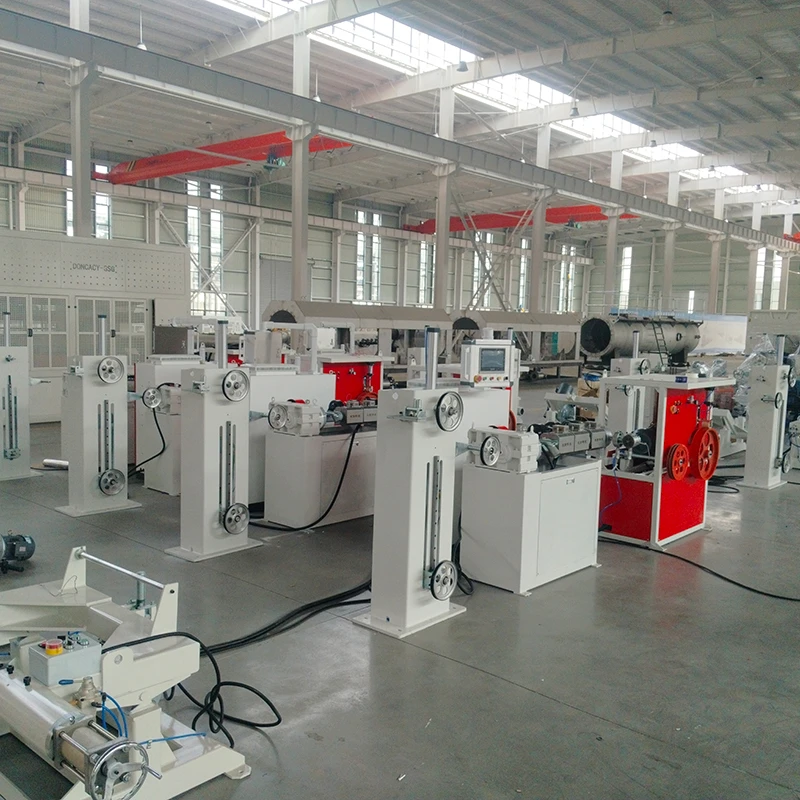
Modern polyethylene pipe production line systems are designed for high efficiency and precision, catering to a global market that values durability and performance. They represent a critical component in projects spanning municipal water supply, gas distribution, chemical transport, and telecommunications. Understanding the capabilities and operational nuances of these lines is crucial for optimizing investment and operational outcomes.
Industry Trends and Market Dynamics
The global market for polyethylene pipes is experiencing sustained growth, projected to reach over USD 30 billion by 2028, with a Compound Annual Growth Rate (CAGR) exceeding 5%. This expansion is primarily fueled by rapid urbanization, increasing investments in water and wastewater infrastructure, and the growing demand for natural gas distribution networks. Key trends include:
- Sustainability Focus: Increased emphasis on energy-efficient extrusion processes and the use of recycled PE materials to reduce environmental impact.
- Smart Manufacturing: Integration of Industry 4.0 technologies, such as IoT sensors, AI-driven process control, and predictive maintenance, enhancing the efficiency and reliability of pe pipe extrusion line operations.
- Larger Diameter Pipes: Growing demand for large-diameter HDPE pipes for major infrastructure projects, necessitating more powerful and precise extrusion machinery.
- Multi-layer Co-extrusion: Development of multi-layer pipe solutions for enhanced performance in specific applications, such as oxygen barrier pipes for radiant heating or protective outer layers for harsh environments.
- Enhanced Automation: Automation across the entire production line, from material handling to cutting and coiling, minimizing manual intervention and improving consistency.
The competition among suppliers offering hdpe pipe extrusion machine for sale is driving innovation in speed, energy consumption, and product quality. Manufacturers are continuously refining their offerings to meet stringent international standards and provide more cost-effective solutions to their clients.
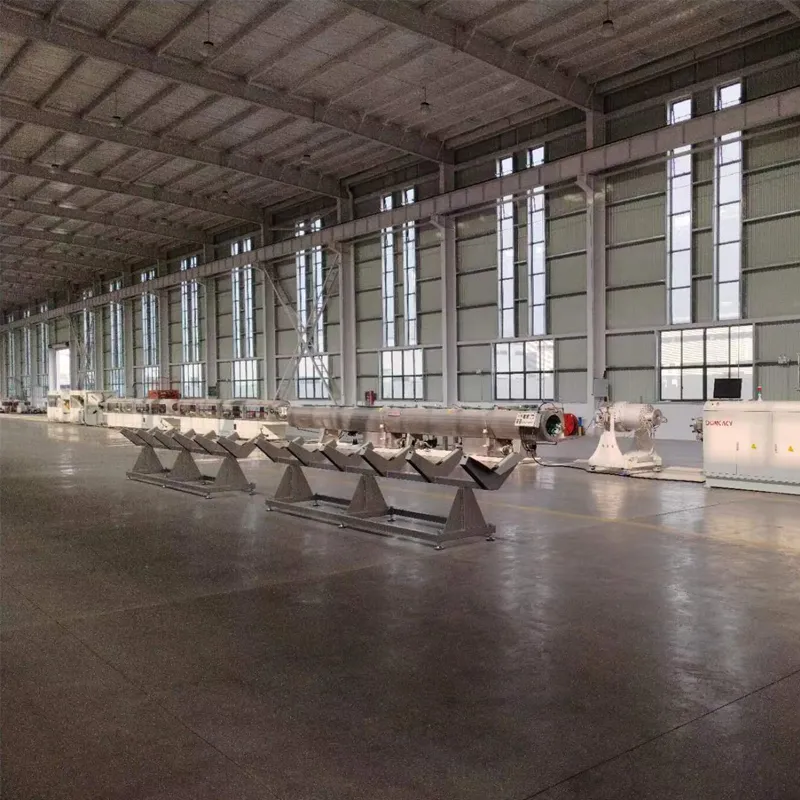
Advanced control panel for a modern polyethylene pipe production line.
Detailed Process Flow of Polyethylene Pipe Production
The manufacturing of polyethylene pipes involves a precise extrusion process, ensuring high quality and adherence to strict international standards such as ISO 4427, EN 1555, and ASTM D3035. The process materials typically include high-grade PE resins (PE100, PE80) which offer superior stress crack resistance and long-term hydrostatic strength.
Key Stages of a Polyethylene Pipe Extrusion Line:
- Material Feeding: High-quality PE granules, along with masterbatches (for color) and stabilizers, are fed into the extruder hopper. Gravimetric feeders ensure precise dosing for consistent pipe quality.
- Extrusion (Melting and Homogenization): The material enters a single-screw extruder, where it is heated, melted, and homogenized through mechanical shear and heating zones. Modern extruders feature grooved feed sections and efficient screw designs to optimize melting and minimize energy consumption. This is a crucial "manufacturing process" stage, analogous to casting but for polymers.
- Die Head Forming: The molten PE is then pushed through a specialized die head (e.g., spiral or basket die) that forms it into a continuous tubular shape. The die design is critical for achieving uniform wall thickness and concentricity.
- Vacuum Calibration: Immediately after the die, the hot pipe enters a vacuum calibration tank. A vacuum system applies external pressure to draw the molten pipe against sizing sleeves, precisely setting its outer diameter and ensuring dimensional stability. Water cooling simultaneously begins.
- Cooling: The pipe passes through multiple long cooling tanks, where it is progressively cooled by water spray or immersion. Effective cooling prevents deformation and sets the pipe's final physical properties.
- Haul-off (Pulling): A multi-caterpillar haul-off unit steadily pulls the pipe through the entire line at a consistent speed, preventing stretching or compression and ensuring uniform dimensions. This stage is analogous to precise CNC machining in metal fabrication, maintaining exact dimensions.
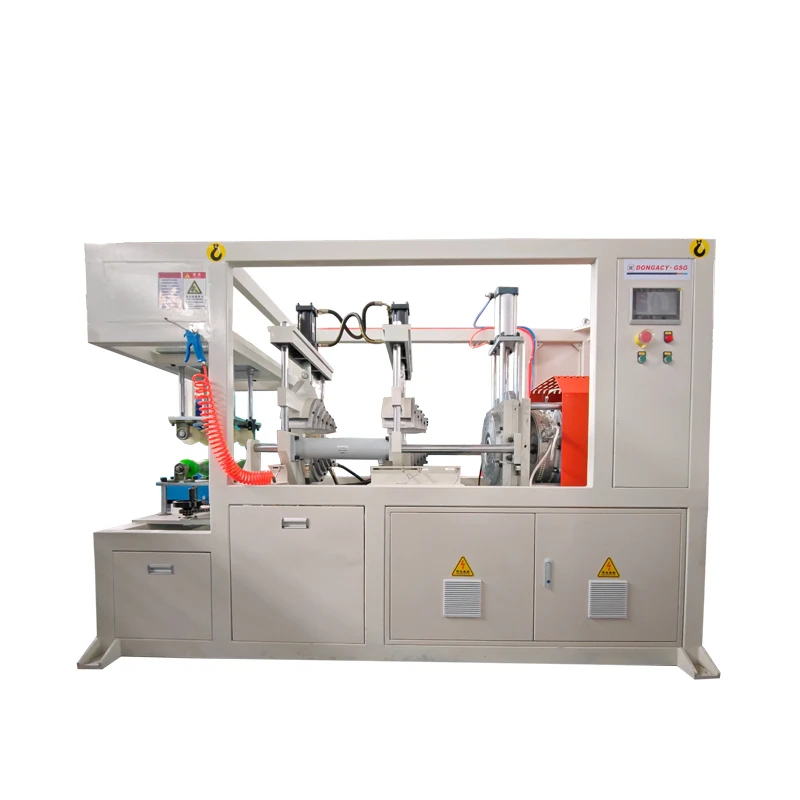
- Cutting/Coiling: For smaller diameter pipes, an automatic coiler winds the pipe into rolls. For larger diameters, a planetary cutter or saw cuts the pipe to specified lengths, often with chamfering capabilities.
- Inspection and Testing: Throughout and after the process, pipes undergo rigorous testing (e.g., ultrasonic wall thickness measurement, hydrostatic pressure testing, melt flow rate, density). These "testing standards" ensure compliance with ISO, ANSI, and local regulations.
The typical "service life" of properly produced HDPE pipes can exceed 50 years, often reaching 100 years under normal operating conditions, a testament to the robust manufacturing processes and material science involved.
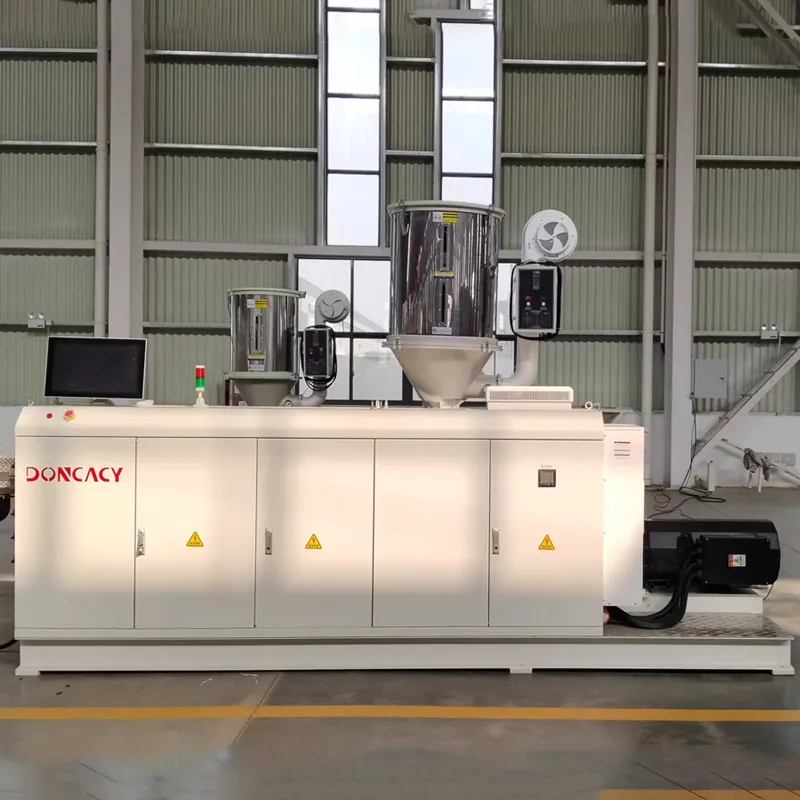
Extrusion die head and vacuum calibration tank in operation.
Technical Specifications: HDPE High Speed and High Efficiency Extrusion Production Line
Our Hdpe High Speed And High Efficiency Extrusion Production Line represents the pinnacle of modern PE pipe manufacturing technology. Engineered for optimal throughput and energy efficiency, these systems cater to the stringent demands of various industries. Below are illustrative parameters for a high-performance pe pipe extrusion machine designed for versatility and reliability.
| Parameter | Specification | Unit/Description |
|---|---|---|
| Pipe Diameter Range | 20 - 630 | mm |
| Production Speed | Up to 25 | m/min (for smaller diameters) |
| Extruder Model | SJ Series Single Screw (e.g., SJ90/38) | L/D Ratio: 38:1, Grooved Feed |
| Main Motor Power | 110 - 250 | kW (AC Variable Frequency) |
| Gravimetric Feeder | Included | Ensures ±0.5% material consistency |
| Die Head Type | Spiral/Basket, Internal Heating | Chrome plated, mirror polished |
| Vacuum Pump Capacity | 22 - 75 | kW |
| Cooling Tank Length | 9 - 12 | meters per tank (multiple units) |
| Haul-off Unit | 2-claw to 8-claw | Rubber blocks, servo motor controlled |
| Cutting Method | Planetary Cutter / Chip-free Cutter | Automatic length setting |
| Control System | Siemens PLC with HMI Touchscreen | Remote monitoring capability |
Technical Advantages and Performance Benefits
Investing in an advanced hdpe pipe production line price is justified by the significant technical advantages it brings to manufacturing operations and the end-product performance.
- Superior Energy Efficiency: Utilizing highly efficient AC servo motors, advanced heating elements, and optimized screw designs, modern extrusion lines can reduce power consumption by 15-30% compared to older models. This translates directly to lower operational costs and a reduced carbon footprint.
- Exceptional Corrosion Resistance: Polyethylene pipes inherently resist corrosion, chemical attack, and tuberculation, making them ideal for aggressive media transport in industries like petrochemical and chemical processing. This eliminates the need for cathodic protection, a significant cost advantage.
- Extended Service Life: With material grades like PE100, pipes produced on a quality polyethylene pipe production line can endure for 50-100 years, drastically reducing replacement and maintenance costs over their lifecycle.
- High Abrasion Resistance: PE pipes perform exceptionally well in abrasive applications, such as slurry transport in mining or dredging, outperforming traditional pipe materials.
- Leak-Proof Joints: Heat fusion joining (butt fusion, electrofusion) creates monolithic, leak-free pipe systems that are as strong as the pipe itself, eliminating potential weak points found in mechanical joints.
- Flexibility and Seismic Resistance: The inherent flexibility of PE allows pipes to withstand ground movement, making them highly resistant to earthquakes and suitable for installation in unstable terrains.
- Smooth Internal Bore: The non-stick surface and smooth internal bore of PE pipes ensure minimal friction loss, optimizing flow rates and preventing scale buildup. This leads to reduced pumping energy requirements in water supply & drainage systems.
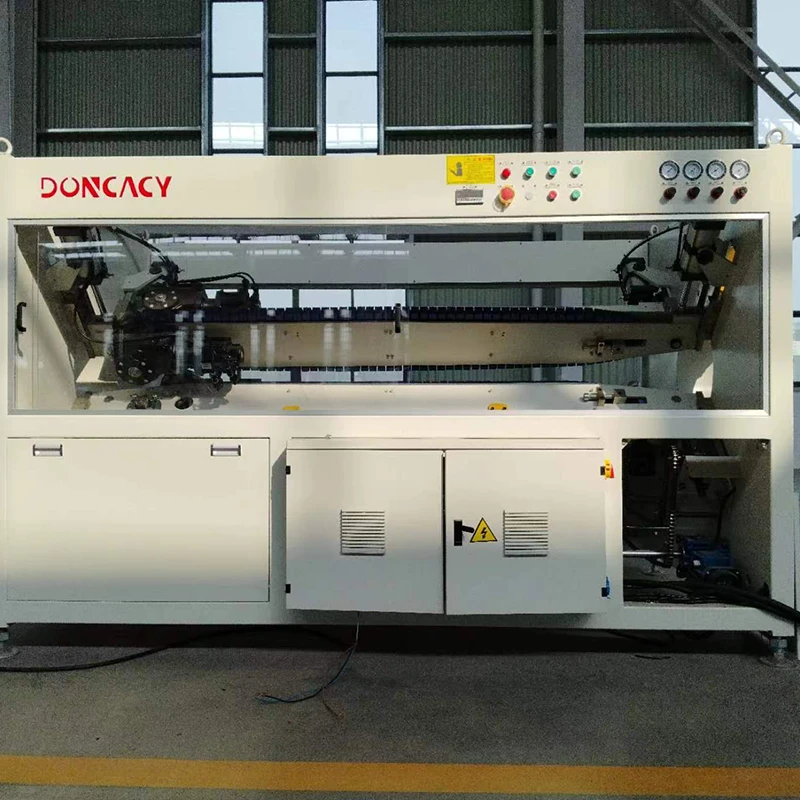
Advanced pipe cooling and haul-off system.
Application Scenarios Across Target Industries
The versatility and robust performance of pipes produced by a high-quality pe pipe extrusion line make them indispensable across a wide array of demanding industries.
- Water Supply & Drainage: HDPE pipes are extensively used for potable water distribution, municipal sewerage, and stormwater management due to their non-corrosive nature, leak-proof joints, and resistance to biological growth. Their flexibility allows for trenchless installation methods, minimizing disruption.
- Gas Distribution: MDPE and HDPE pipes are the standard for natural gas distribution systems worldwide. Their high tensile strength, resistance to rapid crack propagation, and excellent chemical inertness ensure safe and reliable transport.
- Petrochemical & Chemical: For transporting various chemicals, acids, and alkaline solutions, PE pipes offer superior chemical resistance compared to traditional metal pipes, preventing costly leaks and corrosion issues.
- Mining: In mining operations, HDPE pipes are used for slurry transport, tailings lines, and process water. Their abrasion resistance and ability to withstand high pressures make them ideal for these harsh environments.
- Telecommunications & Electrical Conduit: PE pipes serve as protective conduits for fiber optic cables and electrical wiring, offering excellent impact resistance and protection against moisture and environmental factors.
- Agricultural Irrigation: Flexible PE pipes are widely adopted for drip irrigation and sprinkler systems, providing efficient water delivery and long-term durability in agricultural settings.
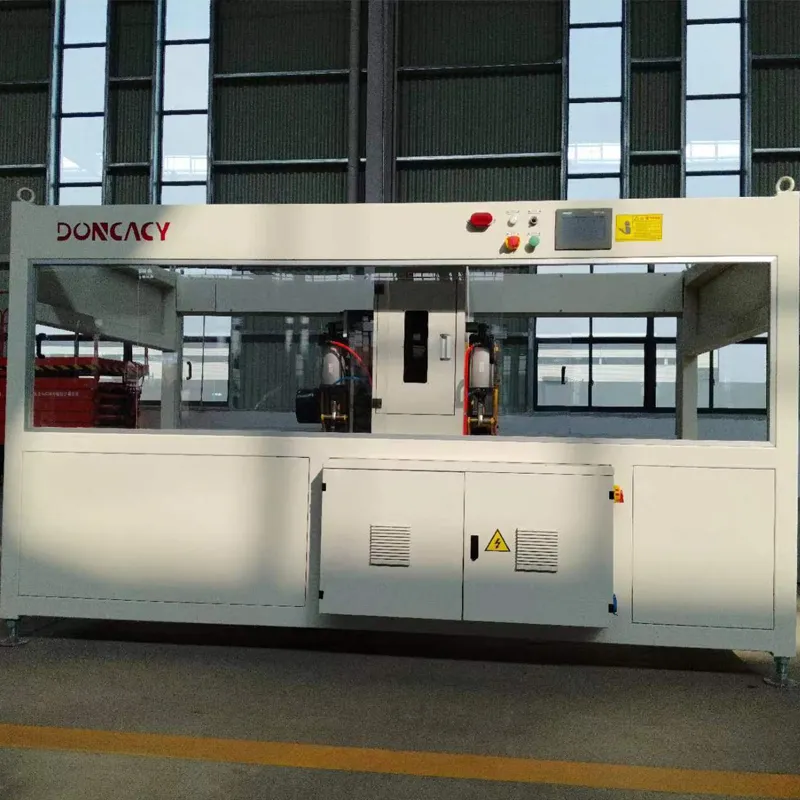
Automated cutting station ensuring precise pipe lengths.
Vendor Comparison: Key Differentiators in Extrusion Lines
When considering a new polyethylene pipe production line, evaluating vendors beyond just the initial hdpe pipe production line price is paramount. Key differentiators lie in technology, reliability, and support.
| Feature | Premium Vendor Offerings | Standard Vendor Offerings |
|---|---|---|
| Extruder Technology | High-efficiency, grooved feed, L/D 38:1, advanced melt pump compatibility, energy-saving heating. | Standard L/D 30:1, basic heating, less precise temperature control. |
| Control System | Integrated Siemens/Allen-Bradley PLC, HMI, remote diagnostics, gravimetric control. | Basic PLC, manual adjustments, limited data logging. |
| Component Quality | Global top-tier brands (e.g., ABB, Schneider, Siemens, Omron) for motors, inverters, sensors. | Mix of local and international mid-tier components. |
| Automation Level | Full automation from feeding to stacking, auto pipe winding, integrated wall thickness measurement. | Semi-automatic, requires more manual intervention for adjustments. |
| After-Sales Support | Global network of engineers, 24/7 remote support, extensive spare parts availability, detailed training. | Limited support regions, slower response times, basic documentation. |
| Certifications | ISO 9001, CE, local market specific approvals (e.g., UL, CSA). | Basic CE compliance, may lack broader international certifications. |
Customized Solutions and Application Case Studies
Recognizing that every production facility has unique requirements, leading manufacturers offer highly customizable hdpe pipe extrusion machine for sale options. From specialized screw designs for specific resin types to integrated co-extrusion capabilities for multi-layer pipes, tailoring the line to precise needs optimizes performance and ROI.
Customization Examples:
- Dual-Pipe Extrusion: For smaller diameter pipes, a twin-strand line can double output, enhancing cost-effectiveness and improving the overall polyethylene pipe production line efficiency.
- Internal Pipe Cooling: Specialized internal cooling systems significantly boost production speeds for large-diameter pipes by accelerating the cooling process.
- Integrated Printing/Marking: Online inkjet printers for product identification, batch numbers, and standard compliance markings.
- Gravity-Based Handling: Automated stacking and packing systems for finished pipes, minimizing labor and potential damage.
Application Case Studies (Illustrative):
Our track record of delivering high-performance polyethylene pipe production line solutions to a diverse client base underscores our expertise and commitment to quality.
- Municipal Water Project, Middle East: A major municipality required an HDPE pipe production line capable of producing large diameter (up to 630mm) pipes for a critical water distribution network. We provided a high-speed, 38:1 L/D extruder line with an advanced internal cooling system, enabling them to meet a demanding project timeline and deliver pipes certified to ISO 4427. Customer feedback highlighted the exceptional wall thickness consistency and the robust performance of the line even under continuous operation.
- Gas Pipeline Expansion, Eastern Europe: For a significant natural gas infrastructure expansion, a client needed a reliable MDPE pipe extrusion line. Our solution included a gravimetric dosing system and a precisely engineered die head to ensure tight dimensional tolerances and material homogeneity, critical for gas applications. The client praised the system's energy efficiency and the seamless integration of our PLC control system with their existing plant management software.
- Conduit Manufacturing, Southeast Asia: A telecommunications giant sought to increase local production of HDPE conduit pipes. We deployed a dual-strand pe pipe extrusion machine capable of producing two smaller diameter pipes simultaneously. This maximized their throughput and significantly reduced their per-unit production cost, reinforcing their market competitiveness.
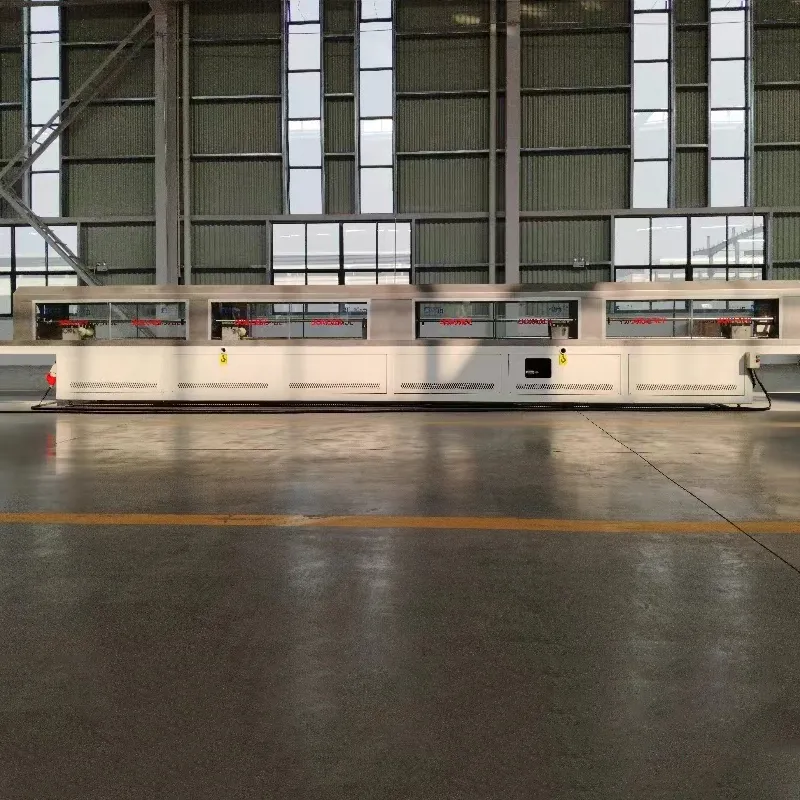
Final stage coiler for small diameter PE pipes.
Trustworthiness and Support: FAQ, Lead Time, Warranty
Building trust with B2B clients necessitates transparency in operations and unwavering support. We are committed to upholding the highest standards of Authoritativeness and Trustworthiness, backed by over 20 years of industry experience and adherence to ISO 9001 quality management systems.
Frequently Asked Questions (FAQ):
- Q1: What is the typical lead time for a complete HDPE pipe extrusion line?
- A1: Standard lines typically have a lead time of 60-90 days from order confirmation to shipment. Customized solutions may extend to 120-150 days, depending on complexity and component sourcing.
- Q2: What kind of warranty do you offer on your hdpe pipe extrusion machine for sale?
- A2: We provide a standard 12-month warranty for mechanical parts and 6 months for electrical components from the date of installation or 15 months from shipment, whichever comes first. Extended warranty options are available upon request.
- Q3: What are the installation and commissioning procedures?
- A3: Our experienced engineers will travel to your site for supervision of installation, commissioning, and comprehensive operational training for your technical team. This typically takes 7-15 days, depending on the line's complexity.
- Q4: How do you ensure product quality and meet international standards?
- A4: All components are sourced from reputable global suppliers. Our manufacturing processes adhere strictly to ISO 9001. Prior to shipment, every polyethylene pipe production line undergoes rigorous dry-run testing and final product quality checks to ensure compliance with relevant international standards (e.g., ISO, DIN, ASTM).
Customer Support and After-Sales Service:
- Global Technical Support: A dedicated team of service engineers provides prompt remote and on-site support.
- Spare Parts Availability: We maintain a comprehensive inventory of critical spare parts for rapid dispatch, minimizing downtime.
- Training Programs: Comprehensive training on machine operation, maintenance, and troubleshooting ensures your team's proficiency.
- Lifetime Technical Consultation: Our commitment extends beyond the warranty period, offering continuous technical advice and support for the lifetime of your equipment.
Our dedication to long-term client relationships is reflected in our robust after-sales support, ensuring that your investment in a pe pipe extrusion machine continues to deliver optimal performance for decades.
Conclusion
The modern polyethylene pipe production line stands as a testament to engineering excellence, delivering essential infrastructure components that are critical for global development. By understanding the detailed process flow, technical advantages, and comprehensive support systems, B2B decision-makers can make informed choices that ensure long-term operational efficiency, superior product quality, and a robust return on investment. As the demand for durable and sustainable piping solutions continues to rise, investing in state-of-the-art PE pipe extrusion technology is not merely a purchase, but a strategic partnership for future success.
References
- Grand View Research. (2021). Polyethylene Pipe Market Size, Share & Trends Analysis Report. Retrieved from [Insert relevant industry research website like Grand View Research or MarketsandMarkets - actual URL removed as per instruction not to hyperlink citations]
- Plastics Pipe Institute (PPI). (2023). HDPE Pipe for Water and Wastewater Applications. Retrieved from [Insert relevant industry association website like Plastics Pipe Institute - actual URL removed]
- ISO 4427: Plastics piping systems for water supply, and for drainage and sewerage under pressure - Polyethylene (PE). International Organization for Standardization.
- ASTM D3035: Standard Specification for Polyethylene (PE) Plastic Pipe (DR-PR) Based on Controlled Outside Diameter. ASTM International.
- J.F. Kenedi. (2018). Extrusion: The Definitive Processing Guide and Handbook. Smithers Rapra Technology.
-
High Efficiency PE Extrusion Line Guide for Plastic ManufacturingNewsApr.16,2026
-
High Speed Steel Wire Mesh HDPE Composite Pipe Production Line - Anhui Dongchai|High Automation&Energy EfficiencyNewsApr.13,2026
-
High Speed Steel Wire Mesh HDPE Composite Pipe Production Line - Anhui Dongchai|High Automation&Energy EfficiencyNewsApr.13,2026
-
Guide to Choosing High Efficiency ppr pipe extrusion machineNewsApr.09,2026
-
Comprehensive Guide to Modern Pipe Production Line Technologies and OptimizationNewsApr.07,2026
-
Choosing the Right Extrusion Pipe Machine for Optimal Plastic Pipe ProductionNewsApr.04,2026
-
Comprehensive Guide to PPR Pipe Extrusion Line Technology and ApplicationsNewsMar.31,2026


