
Understanding Plastic Pipe Production Lines: The Backbone of Modern Infrastructure
Plastic pipes have quietly become essential components of almost every modern infrastructure project across the globe — from water supply and sewage systems to telecommunications and industrial applications. But have you ever paused to consider how these pipes come to life on the factory floor? That’s exactly what a plastic pipe production line is all about. It’s the complex yet fascinating assembly of machinery and processes designed to transform raw plastic materials into the durable, versatile piping vital for countless sectors worldwide.
Why should this matter beyond the factory gates? Well, plastic pipes are pivotal for sustainable water management, energy efficiency, and public safety. Understanding the production line offers insight into the quality, cost, and environmental footprint of these products — something industries and consumers increasingly demand as global populations grow and climate concerns mount.
The Global Context: Why Plastic Pipe Production Lines Matter More Than Ever
Globally, the plastic piping market is projected to grow annually by more than 5% (according to recent ISO and World Bank data), driven by rapid urbanization, expanding water treatment needs, and infrastructure upgrades particularly in developing economies. Yet, despite this growth, there are challenges around ensuring production is efficient, environmentally responsible, and adaptable to diverse industrial needs.
For example, the UN has emphasized that safe and affordable water supply is a fundamental goal — but it can’t be achieved without robust pipeline networks. This is where advanced production lines play a role, helping create pipes that last decades while keeping costs manageable.
Interestingly, the evolution in these production systems parallels industrial automation trends, pushing companies toward smarter, more flexible manufacturing setups to meet changing regulations and material innovations.
Plastic Pipe Production Lines Explained in Simple Terms
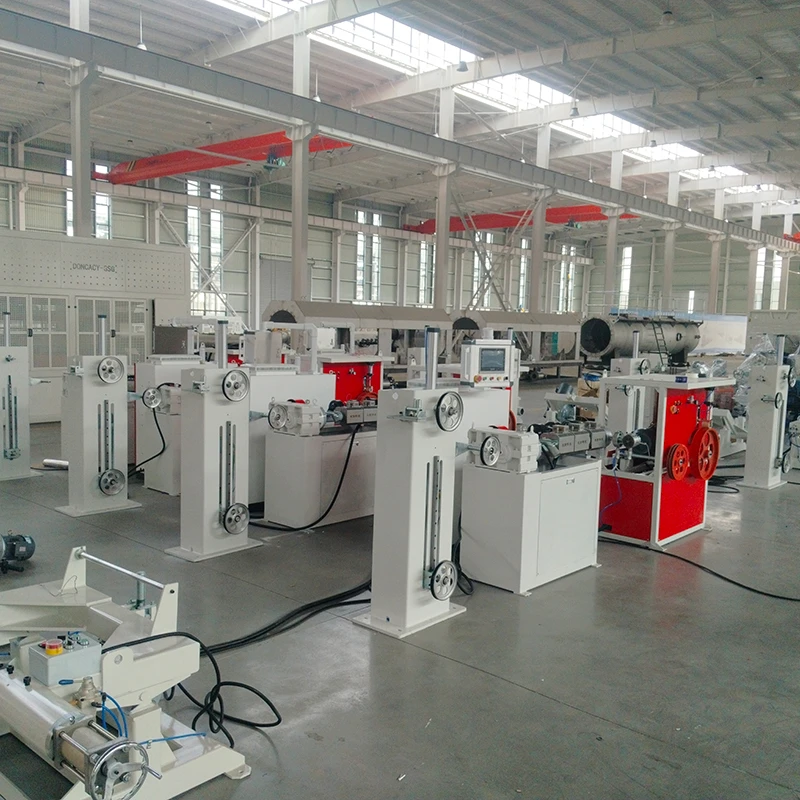
At its core, a plastic pipe production line is an integrated sequence of machines — including extruders, calibration units, haul-off systems, cooling tanks, and cutting devices — all configured to produce pipes of precise diameters, lengths, and material types from various polymers such as PVC, HDPE, or PP.
This streamlined manufacturing chain turns polymer granules or powders into continuous pipes, cooled and measured to meet specific specifications. It’s not just about speed; precision and adaptability are key here because pipes must comply with strict industry standards, sometimes for hazardous environments or extreme pressures.
Whether supplying municipal waterworks or telecommunications casings, these production lines enable industries to meet demand reliably.
Key Components & Factors Influencing Plastic Pipe Production Lines
1. Material Compatibility and Quality Control
The choice of polymer – whether high-density polyethylene (HDPE), polyvinyl chloride (PVC), or polypropylene (PP) – directly impacts durability and application suitability. Precision sensors and inline testing equipment ensure consistent wall thickness and tensile strength, minimizing defects and waste.
2. Scalability and Throughput
Modern production lines aim to balance high output speeds (often over 100 m/min) with flexibility — enabling quick changes in pipe diameter or extrusion profiles to match different market demands.
3. Energy Efficiency
Energy consumption remains a crucial factor. Advances in screw design for extruders and improved motor controls help reduce power draw. Green manufacturing protocols also encourage waste recycling within the process — turning scrap pipe bits back into feedstock.
4. Automation and Data Integration
Many lines now integrate Industry 4.0 elements — connecting production data to digital dashboards for real-time monitoring, predictive maintenance, and quality reporting. It’s no longer just mechanical operations; it’s smart manufacturing.
5. Cost Efficiency and Maintenance
Operational costs are driven by raw material fees, energy, labor, and equipment uptime. Lines designed for easy maintenance reduce downtime and extend service life, which in turn lowers lifecycle costs.
Global Applications and Use Cases for Plastic Pipe Production Lines
Plastic pipes serve as the arteries of urban life and industrial enterprises worldwide. In Southeast Asia, high-capacity production lines support irrigation projects critical for agriculture. European manufacturers supply specialized pipes to chemical plants needing corrosion-resistant materials. Meanwhile, North American cities rely on plastic piping produced from advanced lines to modernize aging water infrastructure.
In remote mining operations, durable plastic pipes transported from factory floors are installed rapidly to avoid costly delays. Humanitarian organizations deploy piping sourced through these lines for water distribution in disaster zones — allowing quick rebuilding with materials that are lightweight yet robust enough to last years.
Even telecom providers increasingly use plastic conduits made on these lines to protect fiber optic cables underground or on poles, because plastic pipes offer exceptional flexibility and weather resistance.
Advantages and Long-Term Value of Plastic Pipe Production Lines
- Cost-effective supply: Efficient lines deliver pipes at scale, balancing price with quality.
- Environmental sustainability: Reduced waste, recyclable materials, and energy-efficient processes lower carbon footprints.
- Safety and reliability: Consistent manufacturing standards mean better performance, reducing leaks or failures.
- Social impact: Access to reliable water and energy infrastructure transforms communities, empowering growth and dignity.
- Innovation driven: Continuous improvements allow customized pipes that meet evolving technical challenges and industry norms.
Frankly, the societal trust placed in these pipes is immense — you rarely think about them, but failure would cause major setbacks. Quality production lines are what keep that silent promise alive every day.
Product Specification Table: Typical Plastic Pipe Production Line Features
| Component | Specification | Benefit |
|---|---|---|
| Extruder Type | Single/Double Screw (50-120 mm diameter) | Handles various polymers; precise melt control |
| Pipe Diameter Range | 16 mm – 1200 mm | Covers broad applications: domestic to industrial |
| Line Speed | Up to 100 meters/min | Maximizes throughput, reduces lead times |
| Cooling System | Water bath with temperature control | Ensures dimensional stability |
| Automation Level | PLC & SCADA integration | Real-time monitoring and quality control |
Vendor Comparison: Leading Plastic Pipe Production Line Manufacturers
| Brand | Price Range | Special Features | Service & Support |
|---|---|---|---|
| PipeMaster Systems | $200K - $450K | Modular setup, AI-driven defect detection | 24/7 remote diagnostics |
| FlexLine Tech | $180K - $400K | Energy-saving extruders, IoT enabled | On-site and virtual training |
| HydroPipe Solutions | $220K - $480K | Integrated recycling feeder, advanced sensors | Customized maintenance packages |
Emerging Trends and Innovations in the Plastic Pipe Production Industry
The industry is evolving swiftly, driven by environmental imperatives and technological leaps. Automated quality checks powered by AI cut down defects drastically — some engineers mention near-zero defect rates on advanced lines. Meanwhile, bio-based polymer blends and recycled materials are increasingly integrated to soften environmental impacts, aligning with circular economy goals.
Energy harvesting and smarter extruders reduce electricity consumption by up to 30%, which is no small thing when you consider the scale. Additionally, hybrid production lines that can switch polymer inputs on the fly are gaining popularity, giving manufacturers a real edge in custom orders and regional compliance.
The plastic pipe production line arena seems set for digital transformation, with remote monitoring and predictive maintenance becoming standard. The future might even see fully autonomous lines operating with minimal human oversight — but probably not without a human checking a cup of coffee once in a while…
Challenges Within Plastic Pipe Production and How They’re Overcome
Despite remarkable progress, challenges remain. Material inconsistency, energy costs, and equipment wear can affect output quality and expenses. It’s common for manufacturers to wrestle with balancing throughput against defect rates — pushing faster often means risking more scrap.
Expert insights stress the importance of predictive analytics and preventive maintenance to minimize unexpected downtime. Also, material suppliers and manufacturers increasingly collaborate on polymer formulations tailored specifically for extrusion ease and pipe longevity.
On the environmental side, the challenge of microplastics arises, so strict waste management and feedstock quality control protocols are being reinforced. Some vendors have introduced closed-loop recycling within plants, capturing and processing scrap onsite.
FAQ: Frequently Asked Questions About Plastic Pipe Production Lines
- What types of plastic pipes can be produced on these production lines?
- Most plastic pipe production lines can handle PVC, HDPE, PP, and sometimes specialty polymers. This allows for product variation from household plumbing to industrial chemical lines.
- How customizable are plastic pipe production lines for different industries?
- Very customizable. Manufacturers can adjust extrusion dies, cooling methods, and automation levels to produce pipes with precise dimensions, strengths, and additives suited to specific sectors.
- Is it possible to integrate recycled materials in the production process?
- Yes. Many lines now include recycling feeders that blend scrap material into new pipe feedstock, reducing waste and raw material costs while maintaining product integrity.
- What is the typical lifespan of pipes made from these production lines?
- Plastic pipes generally last between 50 to 100 years under normal conditions. The quality of the production line and raw materials heavily influence this durability.
- Can small companies afford these production lines?
- There are options available from compact, semi-automated lines suitable for startups to fully automated industrial-scale setups. Financing and modular designs have made them more accessible.
Conclusion: Why Investing in Plastic Pipe Production Lines Pays Off
In real terms, a plastic pipe production line is far more than a string of machines. It represents the foundation of safe water, efficient energy, and resilient infrastructure — signals of modern progress worldwide. The benefits reach beyond balance sheets into sustainability, social impact, and innovation ecosystems. For anyone looking to understand or invest in plastic pipe manufacturing, the future certainly looks promising.
Curious to see how these production lines might transform your business or project? Visit our website at https://www.ahdc11.com for expert guidance and cutting-edge solutions.
References & Further Reading
-
High Efficiency PE Extrusion Line Guide for Plastic ManufacturingNewsApr.16,2026
-
High Speed Steel Wire Mesh HDPE Composite Pipe Production Line - Anhui Dongchai|High Automation&Energy EfficiencyNewsApr.13,2026
-
High Speed Steel Wire Mesh HDPE Composite Pipe Production Line - Anhui Dongchai|High Automation&Energy EfficiencyNewsApr.13,2026
-
Guide to Choosing High Efficiency ppr pipe extrusion machineNewsApr.09,2026
-
Comprehensive Guide to Modern Pipe Production Line Technologies and OptimizationNewsApr.07,2026
-
Choosing the Right Extrusion Pipe Machine for Optimal Plastic Pipe ProductionNewsApr.04,2026
-
Comprehensive Guide to PPR Pipe Extrusion Line Technology and ApplicationsNewsMar.31,2026


