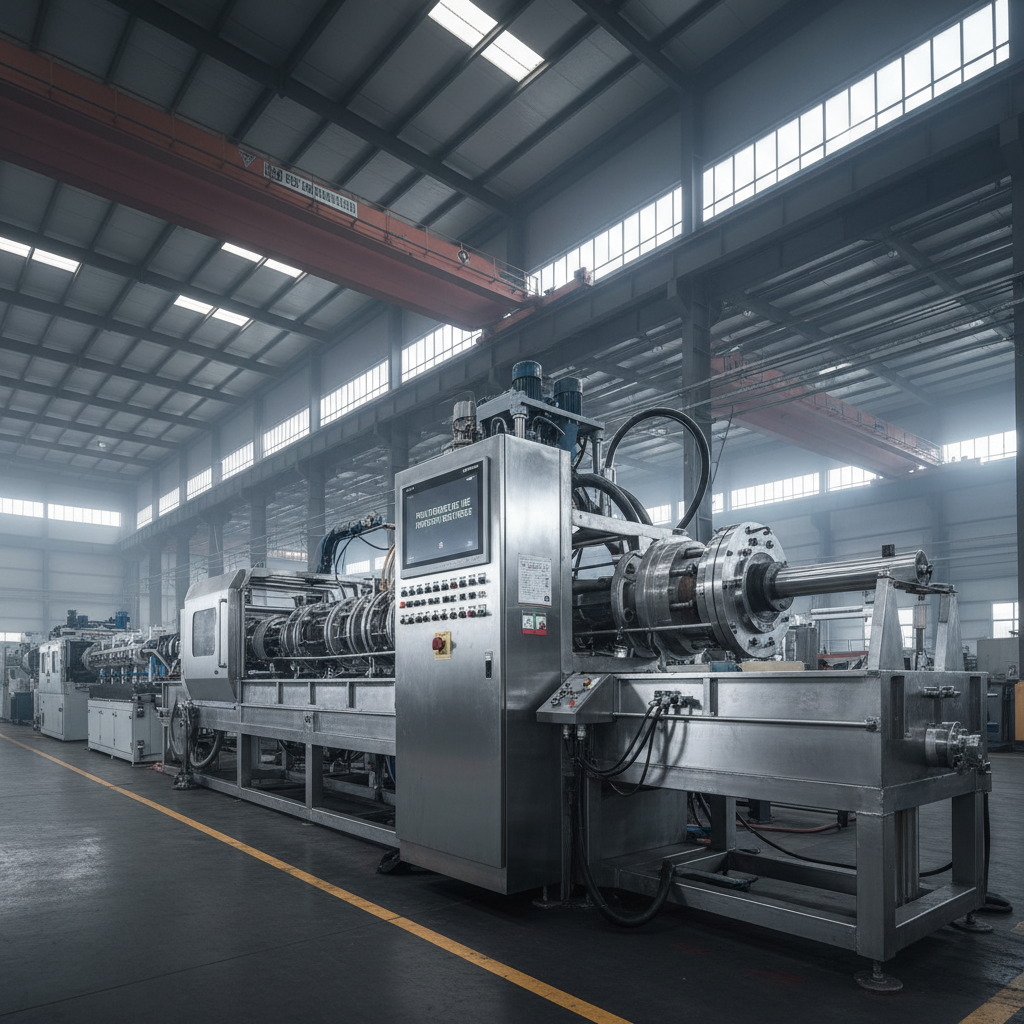
Understanding the dynamics of pvc extrusion machine price is critical for manufacturers aiming to scale their production of pipes, profiles, and cables. In an era where infrastructure demands are surging globally, the cost of acquiring high-efficiency machinery directly impacts the competitive edge of a business, influencing everything from initial capital expenditure to the long-term unit cost of the finished plastic product.
The volatility of raw material costs, coupled with rapid advancements in automation, means that the pvc extrusion machine price is no longer a static figure but a reflection of technological sophistication. From energy-saving screw designs to AI-driven control systems, the value proposition has shifted from merely "buying a machine" to investing in a sustainable production ecosystem that minimizes waste and maximizes throughput.
Whether you are integrating a Composite Pipeline Production Line or a specialized Profile Extrusion Production Line, analyzing the pvc extrusion machine price helps in calculating the Return on Investment (ROI) accurately. By balancing the upfront cost with operational efficiency, manufacturers can ensure they are not just buying the cheapest option, but the most economically viable solution for their specific industrial application.
Global Market Influence on PVC Extrusion Machine Price
The global landscape for plastic processing is heavily influenced by regional infrastructure projects and international trade policies. As developing nations invest in water management and electrical grids, the demand for PVC piping spikes, creating a ripple effect that influences the pvc extrusion machine price. Market volatility in steel and high-grade alloys, used in screw and barrel construction, often leads to price fluctuations in the machinery market.
Furthermore, ISO standards and energy regulations in the EU and North America push manufacturers toward higher efficiency. This transition toward "Green Manufacturing" means that while the initial pvc extrusion machine price might be higher for compliant machines, the reduction in energy overhead and carbon taxes provides a significant economic advantage over the machine's lifecycle.
Defining the Value of PVC Extrusion Machinery
At its core, the pvc extrusion machine price represents more than just the cost of hardware; it is the cost of precision engineering. PVC extrusion is the process of forcing molten PVC through a shaped die to create a continuous profile. The "value" is found in the machine's ability to maintain tight tolerances, ensure uniform wall thickness, and handle various PVC formulations without degradation.
For a business, this investment is linked to humanitarian and industrial needs, such as providing clean drinking water through affordable piping or ensuring safe electrical housing for urban developments. Therefore, the price is a trade-off between the risk of downtime and the reliability of the output. High-end machines reduce the "scrap rate," which directly offsets the initial purchase cost.
Modern pricing structures also account for the integration of the production line. Whether it is a Pipe Extrusion Production Line or a more complex Plastic Production Line, the total system cost includes the extruder, the vacuum calibration tank, the hauling machine, and the cutting unit. Understanding this holistic view prevents buyers from underestimating the total investment needed.
Key Factors Driving PVC Extrusion Machine Price
The first major driver of the pvc extrusion machine price is the quality of the metallurgy. The screw and barrel must withstand extreme abrasion and corrosion caused by PVC stabilizers and additives. Using bimetallic alloys or specialized coatings increases the machine's longevity but also elevates the price point.
Another critical element is the degree of automation. A manual line is significantly cheaper, but a fully automatic line—featuring PLC controls and synchronized speed adjustments—justifies a higher pvc extrusion machine price by reducing labor costs and eliminating human error in the extrusion process.
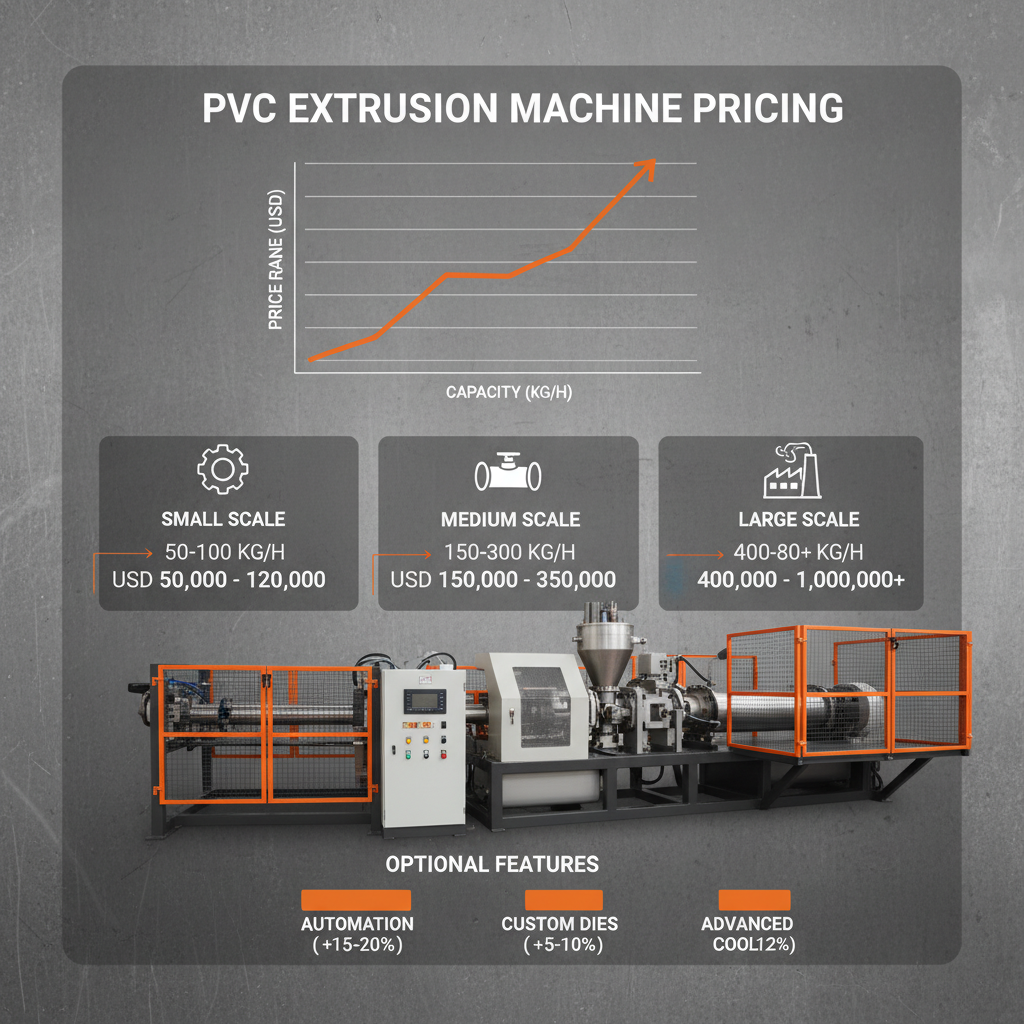
Finally, the output capacity (kg/h) and the diameter of the product it can produce play a pivotal role. A machine capable of producing large-diameter sewage pipes requires a much larger motor and a more robust gearbox than one designed for small electrical conduits, leading to a proportional increase in the pvc extrusion machine price.
Cost Efficiency and Scalability Analysis
When evaluating the pvc extrusion machine price, manufacturers must look at scalability. A modular system allows a company to start with a basic extruder and later add downstream components like advanced cooling systems or automatic sealing machines. This phased investment approach reduces the initial financial burden while allowing the plant to grow alongside its customer base.
Efficiency is measured not just in speed, but in energy consumption per kilogram of PVC processed. Advanced AC motors and frequency converters may increase the upfront pvc extrusion machine price, but they drastically lower the operational cost (OPEX), making the machine more profitable in the long run.
Comparative Value Analysis of PVC Extrusion Machine Price Tiers
Industrial Applications and Global Use Cases
The application of these machines varies wildly by region. In Southeast Asia, the pvc extrusion machine price is often weighed against the demand for low-cost agricultural irrigation piping. In these contexts, durability and ease of maintenance are prioritized over high-end digital synchronization.
Conversely, in developed industrial zones in Europe, the focus is on specialized Profile Extrusion Production Lines for the window and door industry. Here, the pvc extrusion machine price reflects the inclusion of precision molds and multi-chamber cooling systems that ensure the profiles remain perfectly straight and structurally sound for high-end architecture.
Long-term Value and Sustainability Gains
Investing in a high-quality machine with a fair pvc extrusion machine price yields tangible benefits in sustainability. Modern extruders are designed to handle recycled PVC (rPVC) more effectively. Machines that can maintain stability while using a high percentage of regrind material significantly reduce raw material costs and environmental impact.
From a logical angle, the reliability of the equipment ensures "zero-defect" production, which is essential for maintaining trust with B2B clients. A machine that breaks down frequently might have a lower initial pvc extrusion machine price, but the cost of lost production time and wasted materials quickly erases any initial savings.
Innovation in screw geometry—such as barrier screws—allows for better homogenization of the melt. This means the finished product has higher structural integrity, allowing manufacturers to potentially reduce the wall thickness (lightweighting) without sacrificing strength, thereby reducing material costs and increasing profit margins.
Future Trends in PVC Extrusion Technology
The future of the industry is leaning toward "Industry 4.0." We are seeing the integration of IoT sensors that monitor heat and pressure in real-time, predicting maintenance needs before a failure occurs. While this adds to the pvc extrusion machine price, it eliminates the catastrophic costs of unplanned downtime.
Furthermore, the shift toward biodegradable additives and bio-based PVC is forcing a redesign of extrusion screws. New alloys that can handle these modified polymers are entering the market, which will redefine the standard pvc extrusion machine price for the next decade.
Digital twin technology is also becoming common, allowing operators to simulate a production run virtually before starting the machine. This reduces material waste during the setup phase, making the overall operation more efficient regardless of the machine's initial price point.
Comparison of Machine Tiers and Economic Impact
| Machine Tier |
Relative Price Range |
Energy Efficiency |
ROI Timeline |
| Standard Manual |
Low |
Moderate (4/10) |
Fast Initial / Slow Long-term |
| Semi-Automatic |
Medium |
Good (7/10) |
Balanced (18-24 Months) |
| Fully Automated |
High |
Excellent (9/10) |
Medium (24-36 Months) |
| Smart IoT-Enabled |
Premium |
Superior (10/10) |
Long-term Strategic Value |
| Recycle-Optimized |
Medium-High |
High (8/10) |
Fast (via Material Savings) |
| Custom High-Speed |
Very High |
Variable (6/10) |
Volume Dependent |
FAQS
The price is primarily driven by the screw and barrel materials (such as bimetallic alloys), the production capacity (output per hour), the level of automation (PLC vs. manual), and the quality of downstream equipment. Additionally, customization for specific profiles or the inclusion of energy-saving motors will adjust the final cost.
Not necessarily, but it often involves trade-offs. Lower-priced machines may have higher energy consumption, lower precision, or shorter lifespans due to inferior metallurgy. For small-scale operations, they are viable, but for industrial-scale production, the cost of downtime and material waste usually outweighs the initial savings.
Automation increases the upfront pvc extrusion machine price but drastically reduces operational costs. By minimizing human error and optimizing material flow, automated systems increase yield and consistency, typically leading to a more stable and predictable return on investment over 2-3 years.
Yes, if you invest in a modular production line. Many manufacturers allow you to start with the core extruder and later add automatic sealing machines, advanced haul-offs, or IoT monitoring systems. This allows you to manage your capital expenditure while scaling based on actual market demand.
Absolutely. While the initial pvc extrusion machine price is higher for machines with AC motors and advanced heating zones, the reduction in monthly electricity bills and the ability to comply with green energy subsidies often make them the cheapest option over a 5-year window.
Don't look at the sticker price alone. Request a Total Cost of Ownership (TCO) analysis that includes installation, shipping, training, energy consumption estimates, and the cost of replacement parts. A slightly higher initial price from a supplier with better after-sales support is usually more economical.
Conclusion
Navigating the complexities of pvc extrusion machine price requires a shift in perspective from "cost" to "investment." By analyzing the interplay between metallurgy, automation, and energy efficiency, manufacturers can select a system that not only fits their current budget but supports their future growth. The true value of these machines lies in their ability to produce high-quality, consistent PVC products while minimizing operational waste.
As the industry moves toward smarter, greener production, those who invest in high-efficiency and sustainable technology today will lead the market tomorrow. We recommend focusing on TCO (Total Cost of Ownership) rather than initial purchase price to ensure long-term viability. For professional guidance and high-performance machinery, visit our website: www.ahdc11.com.